“Some links in this post are affiliate links, meaning I earn a commission if you make a purchase through them. This helps support Grow & Glow Garden at no additional cost to you. I only recommend products I’ve personally tested or genuinely believe will benefit your garden. Thank you for your support “
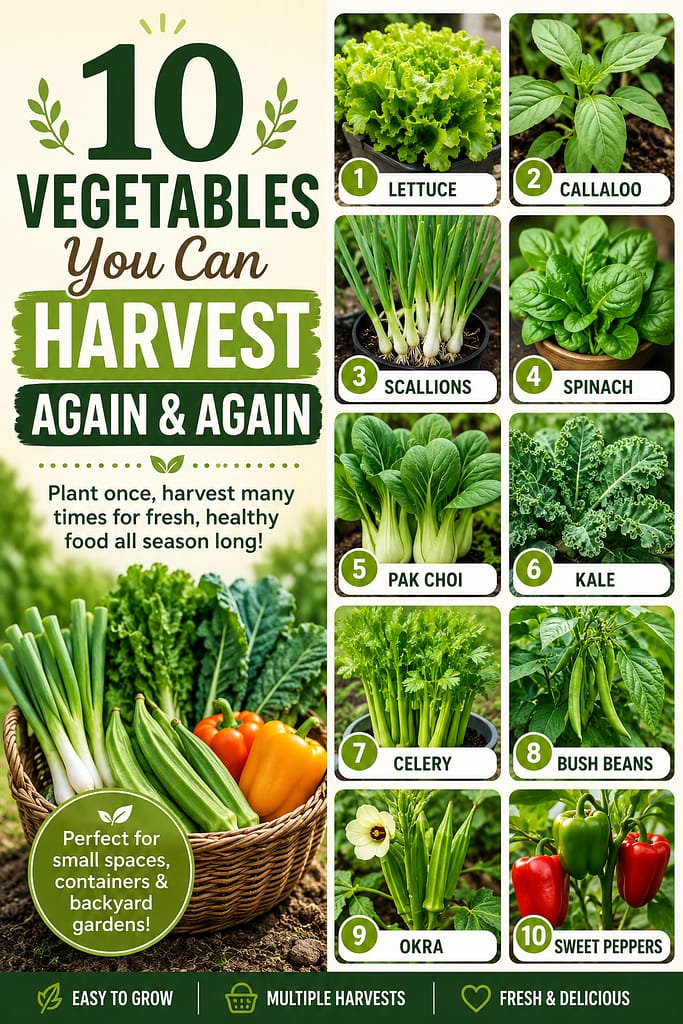
Imagine planting a vegetable once and harvesting from it week after week, month after month — without ever having to buy new seeds or replant from scratch. Sounds too good to be true? It is not! These are called cut and come again vegetables, and they are an absolute game changer for home gardeners across Jamaica.
Whether you are a complete beginner just getting started, a budget-conscious gardener trying to stretch every dollar, someone working with a tiny backyard or balcony, or a container gardener growing on a veranda — these 10 vegetables are your best friends. They keep on giving long after that first harvest, making them the most productive and cost-effective plants you can possibly grow.
In this guide we will cover exactly why each vegetable works as a cut and come again crop, how to grow it successfully in Jamaica’s tropical climate, and practical tips for getting the most harvests from every single plant.
“For beginners just starting out a good quality beginner gardening tool set is the more affordable way to get everything you need in one purchase.”
What Are Cut and Come Again Vegetables?
Cut and come again vegetables are plants that regrow after you harvest them — either from the same stem, the same root, or by producing new growth from the base of the plant. Instead of harvesting the entire plant and having nothing left, you simply take what you need and leave the rest to keep growing.
This method of harvesting is perfect for:
- Beginners — less pressure since you cannot kill the plant by harvesting
- Budget-conscious gardeners — one packet of seeds gives you months of free food
- Small-space gardeners — fewer plants needed since each one produces for longer
- Container gardeners — ideal for pots and raised beds where space is limited
- The result is a continuous supply of fresh vegetables from your garden with minimal effort and maximum value. Let us look at the best ones to grow in Jamaica!
1. Lettuce
Why It Works: Lettuce is one of the fastest growing and most rewarding cut and come again crops you can grow. Harvest the outer leaves and the plant keeps producing new ones from the center — giving you fresh salad greens for weeks on end from a single planting.
Lettuce grows beautifully in Jamaica’s cooler months and in shaded spots during the hotter periods. It is ideal for container growing and small garden beds and it can be ready to harvest in as little as 3 to 4 weeks from planting — making it one of the quickest crops to produce food for your table.
Growing Tips:
- Plant in a location with morning sun and afternoon shade in Jamaica’s hot climate
- Sow seeds directly in containers or garden beds — lettuce does not need much depth
- Water consistently to keep soil moist — lettuce wilts quickly in dry conditions
- Harvest outer leaves only — always leave the inner growing tip intact
- Plant a new batch every 2 to 3 weeks for a continuous supply
- Choose loose leaf varieties rather than head lettuce for best cut and come again results
Pro Tip: In Jamaica’s heat grow lettuce in a container that you can move into the shade during the hottest part of the day. This extends the life of your plants significantly and prevents them from bolting too quickly.
2. Callaloo
Why It Works: Callaloo is Jamaica’s most beloved leafy green and it is a natural cut and come again superstar. The more you harvest young leaves regularly to encourage fresh new growth. It is fast growing, extremely nutritious, and thrives in Jamaica’s warm tropical climate year-round.
Callaloo is arguably the perfect vegetable for Jamaican home gardeners — it is culturally familiar, grows in almost any condition, and provides a continuous supply of iron-rich nutritious leaves for your family’s table. Even beginner gardeners find callaloo almost impossible to fail with!
Growing Tips:
- Direct sow seeds in garden beds or container
- Thin seedlings to 12 to 24 inches apart when they reach 3 inches tall
- Begin harvesting outer leaves when the plant reaches about 8 to 10 inches tall
- Always leave at least 4 to 5 leaves on the plant after each harvest
- Water regularly but do not allow soil to become waterlogged
- Watch for slugs and snails especially during the rainy season
Pro Tip: Callaloo grows so fast in Jamaica that you can harvest from it every 7 to 10 days during the growing season. Keep harvesting regularly to prevent the plant from bolting and going to seed too quickly.
3. Scallions (Green Onions)
Why It Works: Scallions are one of the most impressive cut and come again vegetables because they regrow almost immediately after cutting. Simply snip off what you need leaving about 2 inches of the plant above the soil and watch new green shoots appear within days. A single bunch of scallions can last for many months with proper harvesting!
Scallions are a staple ingredient in Jamaican cooking — used in everything from rice and peas to seasoning chicken and fish. Growing your own supply means fresh scallions always at hand without the weekly expense of buying from the market. They grow beautifully in containers making them perfect for veranda and balcony gardeners.
Growing Tips:
- Plant scallion sets or seeds in well-drained soil or containers at least 6 inches deep
- Space plants about 2 to 3 inches apart — they do not need much room
- Water regularly but avoid waterlogged conditions which cause rot
- Harvest by cutting the green tops leaving at least 2 inches of growth above the soil
- Fertilize lightly with a balanced fertilizer every 4 to 6 weeks to encourage regrowth
- You can also regrow scallions from store bought ones by placing the white root end in water
Pro Tip: Try growing scallions in a recycled plastic bottle or old container on your kitchen windowsill or veranda. They need very little space and having them just steps from your kitchen makes cooking so much more convenient!
4. Spinach
Why It Works: Spinach is a classic cut and come again crop that produces abundantly when harvested correctly. Like lettuce, taking the outer leaves encourages the plant to keep pushing out new growth from the centre. Spinach is packed with iron and vitamins making it one of the most nutritious crops you can grow in your Jamaican garden.
While traditional spinach prefers cooler temperatures, Malabar spinach — a tropical variety also known as vine spinach — thrives in Jamaica’s warm humid climate and is an excellent cut and come again option for local gardeners. It grows vigorously through the rainy season and can even be trained up a trellis to save space.
“Understanding Jamaica climate means knowing which crops grow best in each season. During the dry season there are plenty of vegetables that thrive beautifully – check out our guide on the best vegetables to grow during Jamaica’s rainy season to plan your garden like a pro.”
Growing Tips:
- In Jamaica choose Malabar spinach or Ceylon spinach for best results in the heat
- Plant in a location with morning sun and some afternoon shade
- Sow seeds directly or transplant young seedlings into well prepared beds
- Harvest outer leaves regularly — never remove more than one third of the plant at once
- Water consistently — spinach needs regular moisture to produce tender leaves
- Mulch around the base to keep soil cool and retain moisture
Pro Tip: Malabar spinach is a climbing vine — give it a simple trellis or fence to climb and it will produce abundantly while taking up very little ground space. Perfect for small Jamaican gardens!
5. Pak Choi (Chinese Cabbage)
Why It Works: Pak choi is a fast-growing leafy vegetable that responds beautifully to cut and come again harvesting. When you cut the outer leaves or harvest the whole plant leaving a 1-inch stub it will regrow new leaves within 1 to 2 weeks. It is one of the most popular vegetables at Jamaican markets and grows well in both garden beds and containers.
Pak choi is highly nutritious, versatile in Jamaican cooking, and grows quickly enough to give you multiple harvests from a single planting. It grows best during the cooler drier months in Jamaica but can be grown year-round with proper care and shade cloth protection during the hottest periods.
Growing Tips:
- Direct sow seeds or transplant seedlings into well-drained fertile soil
- Space plants 6 to 8 inches apart for best growth
- Keep soil consistently moist — pak choi wilts quickly in dry conditions
- Harvest outer leaves as needed or cut the whole head leaving a 1 inch stub to regrow
- Watch carefully for caterpillars which are the main pest of pak choi in Jamaica
- Apply neem oil spray preventatively every 2 weeks to keep pests away
Pro Tip: Pak choi is one of the best vegetables for container growing in Jamaica. A 12 inch pot can grow 3 to 4 plants and give you continuous harvests for 2 to 3 months. Perfect for veranda and balcony gardeners!
6. Kale
Why It Works: Kale is one of the most productive cut and come again crops available to Jamaican gardeners. A single kale plant can produce harvests continuously for 6 to 12 months when the outer leaves are harvested regularly. It is incredibly nutritious — packed with vitamins K, A, and C — and is growing rapidly in popularity across Jamaica as people discover its health benefits.
Kale is surprisingly heat-tolerant for a leafy green and certain varieties like Lacinato kale and Red Russian kale do well in Jamaica’s climate especially with afternoon shade. It is an excellent crop for budget-conscious gardeners because one or two plants can provide a family with nutritious greens for many months from a single planting.
Growing Tips:
- Choose heat-tolerant varieties like Lacinato (Dinosaur) kale or Red Russian kale for Jamaica
- Plant in a location with morning sun and afternoon shade during hot months
- Work plenty of compost into the soil before planting — kale is a heavy feeder
- Harvest the lowest outer leaves first working your way up the plant
- Always leave the top growing tip and at least 4 to 6 leaves on the plant after harvesting
- Water deeply and consistently — at least 2 to 3 times per week in dry weather
Pro Tip: Kale actually improves in flavour after the plant experiences a little heat stress — the leaves become slightly sweeter. If your kale tastes bitter try harvesting in the early morning when the leaves are coolest and most flavourful.
7. Celery
Why It Works: Celery is a fantastic cut and come again crop that many Jamaican gardeners overlook. It grows slowly but produces continuously for many months — harvest the outer stalks as needed and the plant keeps producing from the center. Even the leaves are edible and flavorful making celery one of the most complete cut and come again vegetables you can grow.
Celery loves Jamaica’s cooler upland areas like Manchester, St. Andrew, and the Blue Mountain region but can also be grown successfully in lower parishes with afternoon shade and consistent watering. It is particularly popular with budget-conscious gardeners because fresh celery from the supermarket can be expensive — growing your own saves significant money over time.
Growing Tips:
- Start celery from seeds indoors 8 to 10 weeks before transplanting to the garden
- Transplant into rich moist well-drained soil with plenty of compost
- Celery needs consistent moisture — it is one of the thirstiest vegetables in the garden
- Harvest outer stalks when they reach 8 inches tall — always leave the centre intact
- Mulch heavily around plants to keep roots cool and retain moisture
- In hot lowland areas of Jamaica grow celery during the cooler dry season months
Pro Tip: You can actually regrow celery from a store-bought bunch! Cut off the base leaving about 2 inches and place it in a shallow bowl of water on a sunny windowsill. New growth appears within days and you can transplant it to a container or garden bed once roots develop!
“Celery is one of the thirstiest vegetables in the garden and does exceptionally well when grown in a self-watering planter — simply pair it with quality variety seeds pack and you have everything you need to grow a continuous supply of fresh celery right on your veranda or kitchen windowsill.”
8. Bush Beans (String Beans)
Why It Works: Bush beans are a prolific cut and come again crop that produces abundantly over an extended period when harvested regularly. The key is to pick beans frequently — the more you harvest the more the plant produces. Leaving beans on the plant too long signals it to stop producing so regular harvesting is essential for maximum yield.
Bush beans are easy to grow, highly productive, and very popular in Jamaican cooking. They are an excellent crop for beginner gardeners because they are forgiving, fast growing, and respond well to regular harvesting. They also improve your soil by fixing nitrogen making them a great choice for rotating through your garden beds.
Growing Tips:
- Direct sow seeds 1 inch deep and 4 to 6 inches apart — beans do not transplant well
- Plant in well-drained fertile soil in a sunny location
- Water consistently especially during flowering and pod development
- Harvest pods when they are firm and snap cleanly — before the seeds inside become bumpy
- Pick every 2 to 3 days during peak production to keep plants producing
- Never let pods dry on the vine unless you want to save seeds for the next planting
Pro Tip: Plant bush beans in succession — sow a new batch every 3 weeks throughout the growing season. This gives you a continuous supply of fresh beans rather than one large harvest all at once.
9. Sweet Pepper
Why It Works: Sweet pepper plants are one of the most long-lived and productive cut and come again crops you can grow in Jamaica. A single well-cared-for sweet pepper plant can produce dozens of peppers over many months — even years in Jamaica’s warm climate where frost never kills the plant. Pick peppers regularly and the plant responds by producing more flowers and more fruit continuously.
Sweet peppers are incredibly popular in Jamaican cooking and a favourite at local markets. They grow beautifully in containers making them ideal for small space and veranda gardeners. Both green and coloured sweet peppers can be harvested from the same plant — green peppers are simply unripe coloured peppers so you choose when to harvest based on your preference.
Growing Tips:
- Start seeds indoors 6 to 8 weeks before transplanting or buy established seedlings
- Plant in well-drained soil in a full sun location — sweet peppers love heat
- Water consistently but avoid waterlogging which causes root rot
- Stake plants as they grow taller to support the weight of fruiting branches
- Harvest peppers regularly whether green or coloured to keep plants producing
- Peppers in containers can be brought indoors during very heavy storms to protect them
Pro Tip: Sweet pepper plants in Jamaica can produce for 2 to 3 years if well maintained! At the end of each season cut the plant back by about one third — this is called pruning back — and it will regenerate and produce abundantly in the next season.
10. Okra (Lady’s Fingers)
Why It Works: Okra is one of Jamaica’s most beloved vegetables and a natural cut and come again producer. An established okra plant will produce pods continuously for many months in Jamaica’s warm climate — the more frequently you harvest the more pods the plant produces. Okra is drought tolerant, heat loving, and almost perfectly suited to Jamaica’s tropical growing conditions.
Okra is deeply embedded in Jamaican food culture — used in soups, stews, and side dishes across the island. It is also one of the easiest vegetables to grow making it an ideal choice for beginner gardeners. Okra plants grow tall and bushy and can be very productive in both garden beds and large containers.
Growing Tips:
- Direct sow seeds in the ground — okra does not transplant well
- Space plants 18 to 24 inches apart to allow for their large bushy growth
- Okra loves full sun — plant in the sunniest spot in your garden
- Water deeply but infrequently — once or twice per week is usually sufficient
- Harvest pods when they are 3 to 4 inches long and still tender — do not let them get woody
- Harvest every 2 to 3 days during peak season — pods grow very quickly in Jamaica’s heat
Pro Tip: Wear gloves and long sleeves when harvesting okra — the tiny spines on the pods and leaves can irritate sensitive skin. A quick rinse of the pods before cooking also helps remove any residual spines.
Why This Approach Works for Every Type of Jamaican Gardener
For Beginner Gardeners
All 10 vegetables on this list are forgiving and easy to grow — perfect for first-time gardeners. The cut and come again method means you cannot accidentally harvest too much and kill the plant. Each harvest teaches you more about your plants and builds your confidence as a gardener.
“As a beginner do check out this step-by-step guide how to space plants in raised beds avoid these common beginner mistakes you will understand the technique of plant spacing”
For Budget-Conscious Gardeners
One packet of seeds or one small transplant gives you months of continuous harvests. Instead of spending money at the market every week on callaloo, scallions, pak choi, and sweet peppers you grow your own supply for a fraction of the cost. The initial investment in seeds and a few containers pays for itself within just a few weeks of harvesting.
For Small-Space Gardeners
Because these vegetables produce continuously from a single planting you need far fewer plants to keep your family fed. A small 4 by 4-foot raised bed or even a collection of containers on a veranda can produce a surprisingly large amount of fresh food when planted with cut and come again vegetables.
“A compact small, raised garden bed kit is one of the best investments a small-space Jamaican gardener can make — it gives you full control over your soil quality, improves drainage, and allows you to grow more food in less space than a traditional ground level garden.”
“As an Amazon Associate I earn from qualifying purchases.”
For Container Gardeners
Every single vegetable on this list grows well in containers — from small 6 inch pots for scallions and lettuce to larger 10 gallon containers for okra and sweet peppers. Container growing is perfect for Jamaican apartment dwellers, veranda gardeners, and anyone with limited outdoor space. All you need is a container, good potting mix, and regular watering!
Quick Reference Guide — All 10 Vegetables at a Glance
Here is a simple summary of all 10 cut and come again vegetables covered in this article:
1. Lettuce — Harvest outer leaves | Ready in 3 to 4 weeks | Great for containers
2. Callaloo — Harvest outer leaves | Ready in 3 weeks | Jamaican favourite
3. Scallions — Cut tops leaving 2 inches | Regrows in days | Perfect for small pots
4. Spinach — Harvest outer leaves | Ready in 4 to 6 weeks | Choose tropical varieties
5. Pak Choi — Cut outer leaves or whole head | Ready in 30 to 45 days | Great for containers
6. Kale — Harvest outer leaves | Produces for 6 to 12 months | Very nutritious
7. Celery — Harvest outer stalks | Slow but continuous | Great money saver
8. Bush Beans — Harvest pods frequently | Ready in 50 to 60 days | Improves soil
9. Sweet Pepper — Harvest regularly | Produces for years in Jamaica | Great in containers
10. Okra — Harvest every 2 to 3 days | Produces for months | Jamaican staple
You may also enjoy:
- Best Vegetables to Grow in Jamaica’s Dry Season
- Best Herbs to Grow in Jamaica Year-Round
- How to Water Your Vegetable Garden Properly
- How to Start a Backyard Vegetable Garden for Beginners
- Best Gardening Tools Every Jamaican Home Gardener Needs
These guides can help you grow a healthier and more productive home garden year-round.
Conclusion
Growing cut and come again vegetables is one of the smartest gardening strategies available to Jamaican home gardeners. Whether you have a large farm, a small backyard garden, a balcony full of containers, or just a few pots on your veranda — these 10 vegetables will reward your efforts with fresh nutritious food week after week without the need to constantly replant.
Start with just 2 or 3 of the vegetables on this list — callaloo, scallions, and pak choi are perfect for absolute beginners — and expand your cut and come again garden from there as your confidence grows. Before long you will wonder how you ever managed without them!