Watering may seem simple, but it’s one of the most important parts of growing a healthy vegetable garden. Many beginner gardeners struggle with either overwatering or underwatering their plants, which can lead to weak growth, yellow leaves, root problems, and poor harvests.
The good news is that learning how to water your vegetable garden properly doesn’t have to be complicated.
In this beginner-friendly guide, you’ll learn when to water, how often to water, common watering mistakes to avoid, and practical tips to help your vegetables grow strong and healthy.
Why Proper Watering Matters
Vegetables need consistent moisture to grow properly. Water helps plants:
- Absorb nutrients from the soil
- Develop strong roots
- Produce healthy leaves and vegetables
- Survive hot weather and dry conditions
Too little water can stress plants, while too much water can damage roots and encourage disease.
Best Time to Water Your Vegetable Garden
One of the biggest mistakes beginners make is watering at the wrong time of day.
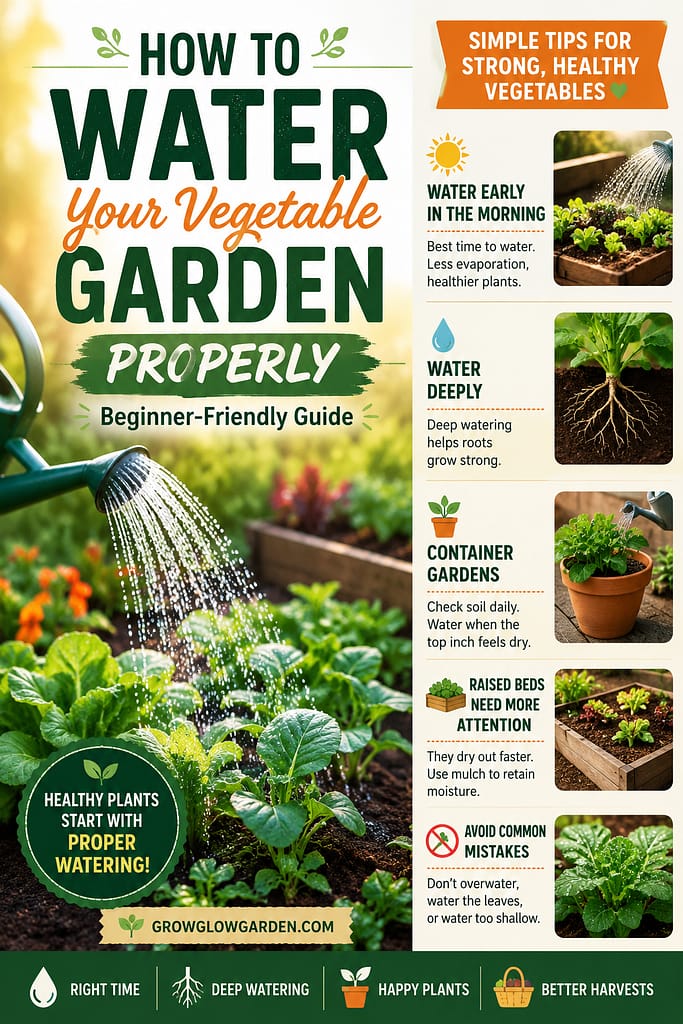
Water Early in the Morning
Morning is usually the best time to water because:
- Temperatures are cooler
- Less water evaporates
- Plants have time to dry during the day
- Roots absorb moisture more efficiently
Evening Watering
If morning watering isn’t possible, late evening can also work. However, avoid watering too late at night because damp leaves overnight may increase the risk of disease.
Avoid Midday Watering
Watering during the hottest part of the day can lead to:
- Faster evaporation
- Wasted water
- Heat stress for plants
How Often Should You Water?
There’s no single watering schedule that works for every garden. Several factors affect how often vegetables need water:
- Weather conditions
- Soil type
- Plant size
- Containers vs. ground planting
- Sun exposure
General Beginner Rule
Most vegetable gardens need deep watering about:
- 2–3 times per week in moderate weather
- More often during hot, dry conditions
It’s better to water deeply and less frequently than to give plants small amounts of water every day.
Signs Your Plants Need Water
Vegetables often show visible signs when they need moisture.
Signs of Underwatering
- Wilting leaves
- Dry or cracked soil
- Slow growth
- Small vegetables
- Crispy leaf edges
Signs of Overwatering
- Yellow leaves
- Mushy stems
- Constantly wet soil
- Root rot
- Fungus or mold
Learning to recognize these signs helps prevent common gardening problems.
Watering Container Gardens Properly
Container gardens dry out faster than in-ground gardens, especially in hot weather.
Container Watering Tips
- Check soil daily during warm weather
- Water when the top inch of soil feels dry
- Make sure containers have drainage holes
- Avoid letting pots sit in standing water
Smaller containers usually need more frequent watering than larger ones.
Watering Raised Bed Gardens
Raised beds often drain faster than traditional gardens.
Raised Bed Tips
- Water slowly and deeply
- Add mulch to retain moisture
- Check soil moisture regularly
- Increase watering during dry periods
Healthy soil with compost helps raised beds hold moisture better.
Use Mulch to Retain Moisture
Mulch is one of the easiest ways to reduce watering needs.
Benefits of Mulching
- Keeps soil cooler
- Reduces evaporation
- Helps soil retain moisture
- Suppresses weeds
Common mulch materials include:
- Dry leaves
- Grass clippings
- Straw
- Coconut husk
Best Ways to Water Vegetables
Different watering methods work better for different gardens.
Water at the Base of Plants
Try to water near the roots instead of spraying leaves heavily.
This helps:
- Reduce disease risk
- Improve root absorption
- Minimize water waste
Use Gentle Water Pressure
Strong water pressure can:
- Wash away soil
- Damage seedlings
- Expose roots
Use a watering can, hose nozzle, or drip system for gentler watering.
Common Watering Mistakes Beginners Make
Watering Too Often
Too much water can suffocate roots and lead to disease.
Watering Too Shallow
Light surface watering encourages weak root systems.
Ignoring Weather Conditions
Plants need different amounts of water depending on:
- rainfall
- heat
- humidity
Poor Drainage
Vegetables struggle in constantly soggy soil.
Hot Weather Watering Tips
During very hot periods:
- Water early in the morning
- Use mulch generously
- Check containers more often
- Provide partial shade for sensitive plants if needed
Heat can dry soil quickly, especially in tropical climates.
Helpful Resources
If you’re just starting your gardening journey, explore this guide grow your own food.
If you are gardening in a small space, consider trying a raised bed garden for even better result, discover best vegetables to grow in Jamaica, or view the best herbs to grow in Jamaica
Conclusion
Learning how to water your vegetable garden properly is one of the most important skills for successful gardening.
By watering consistently, checking soil moisture, and avoiding common beginner mistakes, you can help your vegetables grow healthier, stronger, and more productive.
Start simple, observe your plants regularly, and adjust your watering routine as your garden grows.