Transparency Notice:
Some links in this post are affiliate links, meaning I earn a commission if you make a purchase through them. This helps support Grow & Glow Garden at no additional cost to you. I only recommend products I’ve personally tested or genuinely believe will benefit your garden. Thank you for your support!
Jamaica’s dry season, which typically runs from November through April, can be one of the most challenging times of year for gardeners and farmers. With little to no rainfall, scorching sunshine, and dry, cracked soil, it might seem like a difficult time to grow anything. But here is the good news – the dry season is actually one of the best times to grow a wide variety of vegetables in Jamaica, as long as you choose the right crops and use a few smart growing techniques.
Whether you use to have a large farm in St. Elizabeth, a backyard garden in Kingston, or a few pots on a veranda in Portmore, a raised bed in Manchester, Clarendon, and Portland, this guide will walk you through the best vegetables to grow during Jamaica’s dry season, how to care for them, and tips to make the most of every drop of water.
Starting with the right seeds and heat-tolerant varieties makes a big difference during the dry season. You can explore some reliable options here to get started.
Why the Dry Season is Actually Great for Gardening
Many people make the mistake of thinking that gardening stop during the dry season. In reality, Jamaica’s dry season offer several advantages for vegetable gardening:
- Fewer pests and fungal diseases – many plant diseases thrive in wet, humid conditions. The dry season naturally reduces the spread of these problems.
- Less weeding – weeds grow much slower when rain fall is low, saving you time and effort.
- Better conditions for certain crops – vegetables like tomatoes, peppers, sweet Potatoes, and okra actually prefer dry, warm weather over wet conditions.
- More predictable weather – unlike the rainy season when sudden heavy showers can flood gardens or damage crops, the dry season is more consistent and easier to plant around.
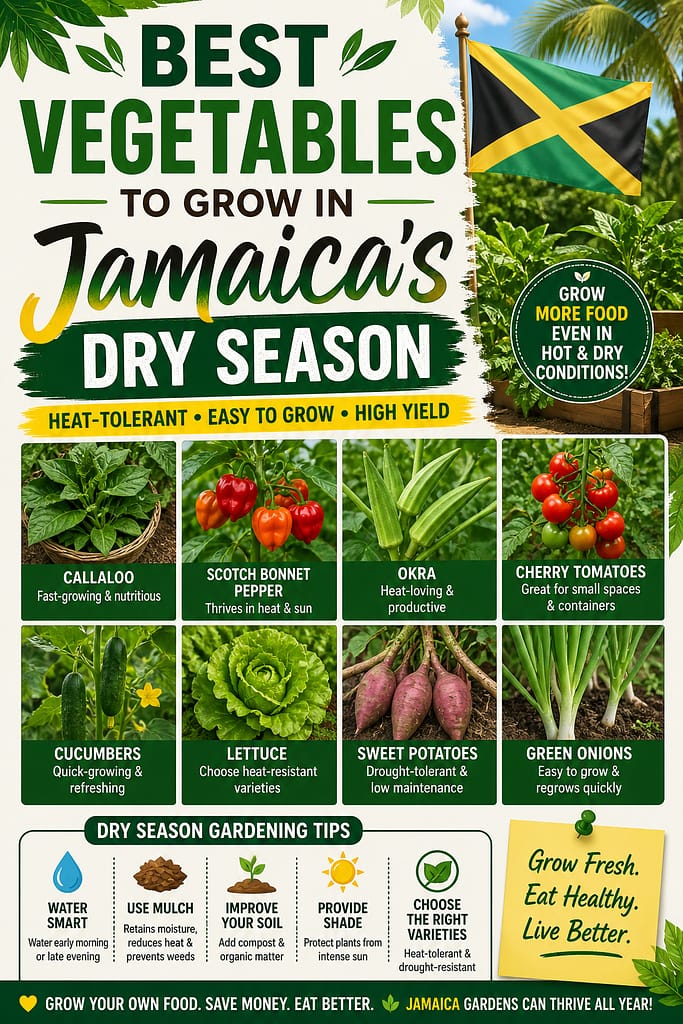
- 📌 Save this guide for Jamaica dry season gardening
1. Tomatoes (Solanum lycopersicum)
Tomatoes are arguably the most popular dry season vegetable in Jamaica. They love the warm, sunny weather and produce abundantly when well-watered. Jamaican varieties like the Caribbean Red’ and locally sold hybrid tomatoes do exceptionally well during this period.
Growing Tips:
- Plant in well-drained soil with plenty of compost or organic matter.
- Water consistently – tomatoes need regular, deep watering, especially once they begin to fruit.
- Stake your plants early to support their growth as they get tall.
- Mulch around the base of the plant to retain moisture in the soil.
Tip: Water tomatoes at the base, not the leaves, to prevent sunscald and disease.
2. Scotch Bonnet and Hot Peppers (Capsicum chinense / annuum)
Scotch Bonnet peppers are a staple of Jamaican cuisine, and thankfully, they are one of the most drought -tolerant vegetables you can grow. Pepper plants actually produce more heat and flavor when they experience a little bit of stress from dry conditions.
Growing Tips:
- Start seeds indoors or in a nursery tray about 6 to 8 weeks before transplanting.
- Peppers prefer sandy loam soil with good drainage.
- Water once every 2 to 3 days during the dry season – do not overwater, as soggy roots can cause root rot.
- Peppers love full sun – plant them where they will get at least 6 to 8 hours of sunlight daily.
Tip: Adding a layer of dry grass or straw mulch around your pepper plants.
Choosing high-quality seeds that are suited for warm climates can significantly improve your harvest and overall success.
3. Okra (Abelmoschus esculentus)
Okra, locally known as ‘Lady’s Fingers,’ is one of the most reliable dry seasons crops in Jamaica. It is highly drought -tolerant, grows quickly, and produces abundantly with minimal input. Okra is a Favorite in many Jamaican households and is used in soups, stew, and side dishes.
Growing Tips:
- Direct sow seeds into the ground – okra does not transplant well.
- Space plants about 18 to 24 inches apart to allow for good air circulation.
- Water deeply but infrequently – once or twice per week is usually sufficient.
- Harvest pods when they are young and tender (about 3 to 4 inches long) for the best flavor and texture.
Tip: Okra plants grow tall and bushy – plant them on the north or east side of your garden so they do not shade smaller plants.
4. Callaloo (Amaranthus viridis)
Callaloo is one of Jamaica’s most beloved leafy greens, packed with iron, vitamins, and minerals. It is fast-growing, heat-tolerant, and does very well in dry conditions. You can begin harvesting leaves within as little as 3 to 4 weeks after planting, making it one of the quickest crops to produce food for your table.
Growing Tips:
- Sow seeds directly in the garden, in rows about 12 inches apart.
- Thin seedlings to about 6 to 8 inches apart once they are a few inches tall.
- Water regularly but do not allow the soil to become waterlogged.
- Harvest outer leaves frequently to encourage the plant to keep producing.
Tip: Callaloo will bolt (go to seed) quickly in extreme heat. Harvest regularly to extend the productive life of your plant.
5. Lettuce (Jericho, Muir, Nevada, and Salvius)
Standard lettuce varieties have no business in Jamaica’s dry season- they ‘ll bolt to seed within days, but heat-tolerant varieties can succeed if you plant them early and provide some protection.
December through January is your only window for lettuce. Plant it any later and even heat-tolerant varieties will struggle. These varieties can handle temperatures up to 80-85 degrees, but when it gets hotter, they’re done.
Growing Tips:
- Sow seeds shallowly, about 1/4 inch deep.
- Space seeds 8 to 12 inches apart, or sow densely and thin out seedlings to this spacing.
- Keep soil consistently moist but not waterlogged to ensure crisp leaves.
- Harvest the whole head at once or use the “cut-and-come -again” method, where you remove only the outer leaves and allow the center to keep growing.
Tip: Fertilizer lettuce is a leafy green that benefits from nitrogen-rich fertilizer or compost.
6. Cucumber (Cucumis sativvus)
Cucumbers love warm weather and grow quickly during the dry season. They are a great choice for trellising, which saves space in the garden and improves air circulation around the plants. Cucumbers are also a profitable crop for small-scale farmers selling at local markets.
Growing Tips:
- Plant seeds in rich, well-drained soil with plenty of compost worked in.
- Train vines up a trellis or fence to keep the fruit clean and improve airflow.
- Cucumbers are heavy drinkers – water deeply every 2 days during very dry spells.
- Harvest cucumbers while still firm and dark green for the best flavor.
Tip: Mulching heavily around cucumber plants is one of the most effective ways to retain soil moisture and reduce watering frequency.
7. Sweet Potatoes (Beauregard, Jewel)
Sweet potatoes are the ultimate low-maintenance dry season crop. plant the slips in January or February, water them until they establish, then practically ignore them for 3-4 months. They’ll be there when you need them, producing abundant harvests with minimal care.
Growing Tips:
- Plant slip (not actual potatoes- the rooted wine cuttings) 12 inches apart in mounded rows.
- The mounds improve drainage and make harvesting easier.
- The biggest mistake with sweet potatoes is overwatering. They’re vines, not swamp.
- Harves in 90-120 days when leaves start to yellow.
Tip: Inspect the soil moisture; too dry or too wet soil can cause problems.
Green Onions (Scallions)
Growing green onions in Jamaica is highly achievable due to the tropical climate however the heat requires specific care to keep them thriving well. The more you cut the leaves above the soil the more it keeps growing back.
Growing Tips:
- Use well-draining soil. mix in compost or organic fertilizer if your soil is poor.
- Then need full sun, but in extreme Jamaican heat, they can tolerate, and often prefer, a spot with little afternoon shade.
- Water consistently. In intense heat, containers can dry out, so check daily and keep the soil moistbut not waterlogged.
- Harvesting you can harvest by cutting the leaves about 1 to 2 inches above the soil, allowing it to grow back.
Tip: Avoid overcrowding which reduce airflow, which can increase the risk of fungal disease during humid, rainy times.
Frequently Asked Questions
How often should I water vegetables during Jamaica’s dry season?
Most vegetables need deep watering 2-3 times per week during the dry season. Water early morning (5-7am) to reduce evaporation. Okra and sweet potatoes need less (once weekly), while lettuce needs daily watering. Always mulch heavily to retain moisture.
Can you grow tomatoes in Jamaica’s dry season?
Yes, but plant early (December-January) and choose heat-resistant varieties like Sungold or Sweet 100. Provide afternoon shade during peak heat (February-March), water daily, and mulch heavily. Harvest before April’s extreme heat stresses plants.
What vegetables don’t need much water in Jamaica?
Okra, sweet potatoes, callaloo, and hot peppers are extremely drought tolerant. Once established, they thrive with just 1-2 waterings per week. These are perfect for busy gardeners or areas with water restrictions during dry season.
How do you protect plants from Jamaica’s dry season heat?
Use 30-50% shade cloth for heat-sensitive crops like lettuce. Mulch all beds with 3-4 inches of straw or dried grass. Water deeply in early morning. Choose naturally heat-tolerant vegetables like okra, eggplant, and callaloo for best results.
If you’re new to gardening, check out this beginner guide to growing your own food at home or check out this beginner friendly guide best herbs to grow in Jamaica year round
Ready to start your dry season garden? Begin with easy, heat-tolerant vegetables and reliable seeds to set yourself up for success.
Final Thoughts
Jamaica’s dry season does not have to mean an empty garden or bare dinner plates. With the right choice of vegetables good soil preparation, and smart water management, you can grow a productive, healthy garden from January through April – and beyond.
Whether you are growing for your own family’s table or for sale at the market, crops like tomatoes, scotch bonnet peppers, okra, callaloo, and cucumbers will reward your efforts with generous harvests. Start small if you are new to dry season gardening, try a few of the crops listed here., and build your confidence season by season.
Happy gardening. Jamaica!