This article contains affiliate links. If you purchase through affiliate links, I may earn a small commission at no extra cost to you. Thank you for supporting Grow & Glow Garden.
Few things are more frustrating than growing a healthy tomato plant only to discover that it’s producing little or no fruit. You may have lush green leaves, strong stems, and even plenty of flowers—but still no tomatoes.
The good news is that this problem is usually caused by one or more common gardening mistakes or environmental conditions, many of which are easy to correct.
In this guide, you’ll learn the most common reasons tomato plants fail to produce tomatoes and the practical steps you can take to encourage a healthy, productive harvest.
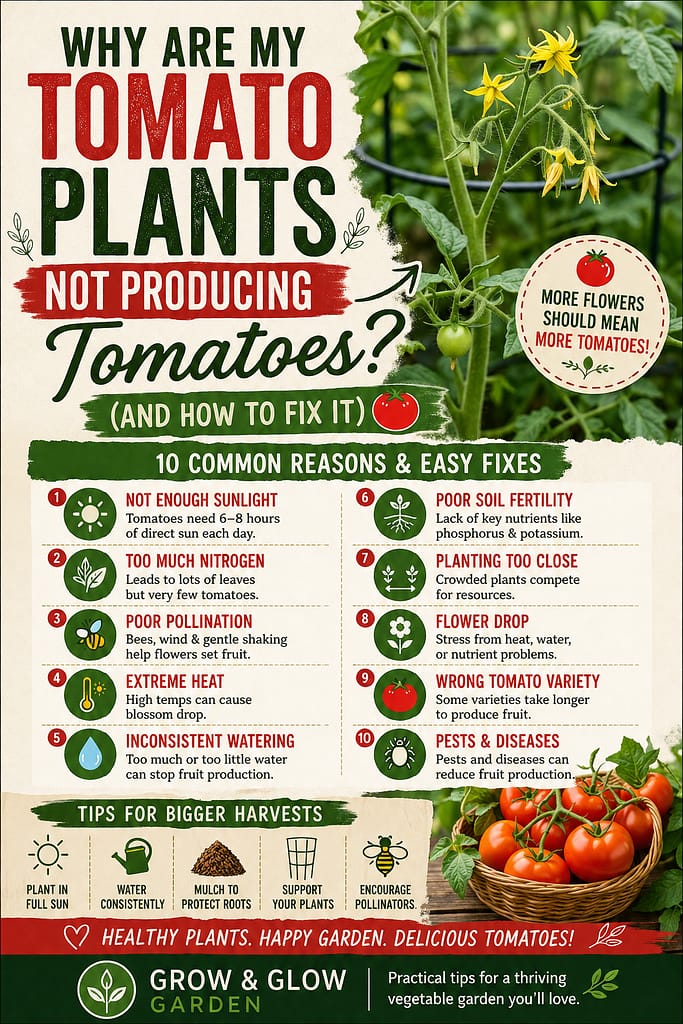
In this guide, we’ll explore the 10 most common reasons tomato plants fail to produce fruit and the simple steps you can take to enjoy a bigger, healthier harvest.
Why Tomato Plants Sometimes Fail to Produce Fruit
Tomato plants need the right balance of sunlight, nutrients, water, temperature, and pollination to develop fruit. If one of these factors is out of balance, your plants may continue growing without producing tomatoes.
Let’s look at the most common causes.
1. Not Enough Sunlight
Tomatoes thrive in full sun and need at least 6–8 hours of direct sunlight each day. Less sunlight often leads to healthy-looking plants with very little fruit.
Signs
- Tall, leggy plants
- Few flowers
- Slow fruit production
How to Fix It
- Move container plants to a sunnier location.
- Trim nearby plants that cast shade.
- Choose the sunniest part of your garden when planting.
2. Too Much Nitrogen
Nitrogen encourages leafy growth, but too much of it can reduce flowering and fruit production.
Signs
- Large, dark green leaves
- Thick stems
- Very few flowers or tomatoes
How to Fix It
- Avoid overusing high-nitrogen fertilizers.
- Switch to a fertilizer formulated for tomatoes.
- Add compost to improve soil naturally.
3. Poor Pollination
Tomato flowers must be pollinated before they can develop into fruit. Wind and insects, especially bees, play an important role.
Signs
- Flowers appear but quickly fall off.
- No small tomatoes develop after flowering.
How to Fix It
- Encourage pollinators by planting flowers nearby.
- Gently shake flowering plants in calm weather.
- Avoid spraying insecticides when plants are flowering.
4. Extreme Heat
Very high temperatures can prevent flowers from setting fruit.
Daytime temperatures above 90°F (32°C) or warm nights above 75°F (24°C) may cause blossoms to drop.
Signs
- Blossoms fall before fruit develops
- Healthy leaves but no tomatoes
How to Fix It
- Water consistently.
- Apply mulch to keep roots cool.
- Provide temporary shade during heat waves.
5. Inconsistent Watering
Tomatoes dislike constant changes between very dry and very wet soil.
Signs
- Blossom drop
- Cracked fruit
- Wilting leaves
How to Fix It
- Water deeply and consistently.
- Check soil moisture regularly.
- Mulch around plants to help retain moisture.
Whether you are struggling with overwatering or underwatering the guesswork ends with a simple soil moisture meter — an affordable tool that tells you exactly when your plants need water and when they have had enough. Simply insert it into the soil and it gives you an instant reading, so you never have to guess again. It is one of the most useful and budget friendly tools any Jamaican home gardener can own.”
As an Amazon Associate, I earn from qualifying purchases.
6. Poor Soil Fertility
Healthy soil provides the nutrients tomato plants need for flowering and fruit production.
Signs
- Weak growth
- Pale leaves
- Small flowers
- Few tomatoes
“One of the most effective and affordable ways to improve poor soil fertility in your garden is to make your own compost at home using kitchen scraps and garden waste you already have. Homemade compost feeds your soil naturally improves drainage retains moisture and provides a steady supply of nutrients to your vegetable plants throughout the growing season — completely free of charge once your compost system is up and running. To learn exactly how to get started check out our complete step by step guide on how to make compost at home — everything you need to know to turn your kitchen and garden waste into free fertilizer for your vegetable garden.”
How to Fix It
- Add finished compost before planting.
- Feed plants with a balanced tomato fertilizer.
- Improve soil every growing season.
“If you are serious about improving your garden soil long term the easiest way to get started with composting is with a dedicated outdoor compost bin — keeping your composting area neat tidy and pest resistant while turning your kitchen and garden waste into rich free fertilizer for your vegetable plants. A good compost bin is one of the best investments any Jamaican home gardener can make for the long-term health and productivity of their garden.”
“For even faster results a compost tumbler is a fantastic upgrade from a standard bin — simply add your kitchen scraps and garden waste close the lid and tumble it every few days. The sealed rotating design keeps pests completely out speeds up decomposition dramatically and in Jamaica’s warm tropical climate can produce finished compost ready to use in your garden in as little as 4 to 6 weeks — significantly faster than a traditional open pile or standard bin.”
As an Amazon Associate, I earn from qualifying purchases
7. Planting Too Close Together
Crowded plants compete for sunlight, water, and nutrients while reducing airflow.
Signs
- Dense foliage
- Increased disease
- Poor fruit production
How to Fix It
- Follow recommended spacing for your tomato variety.
- Prune lower leaves if needed to improve airflow.
8. Flower Drop
Sometimes tomato flowers simply fall off before fruit develops.
This is often caused by:
- Heat stress
- Water stress
- Poor pollination
- Sudden weather changes
How to Fix It
Address the underlying cause and maintain consistent growing conditions.
“Flower drop is one of the most frustrating problems Jamaican vegetable gardeners face — your plants look healthy they are flowering beautifully and then the flowers fall off before producing any fruit. Flower drop is almost always caused by some form of plant stress — whether from inconsistent watering temperature fluctuations poor pollination or pest pressure. If you notice your plants dropping flowers and also showing signs of wilting or general weakness our detailed guide on why are my vegetable plants wilting covers all the common stress factors that affect Jamaican vegetable plants and exactly how to identify and fix each one.”
9. Choosing the Wrong Variety
Different tomato varieties produce fruit at different times.
Determinate Tomatoes
Produce most of their fruit over a shorter period.
Indeterminate Tomatoes
Continue producing tomatoes throughout the growing season.
Knowing which variety you’re growing helps set realistic expectations.
10. Pests and Diseases
Serious pest or disease problems can reduce flowering and fruit production.
Common Problems
- Aphids
- Whiteflies
- Hornworms
- Early blight
- Fusarium wilt
“Pests and diseases are one of the biggest challenges every Jamaican home gardener and small farmer faces — and identifying them correctly is the first step to treating them effectively. From caterpillars stripping your callaloo overnight to aphids attacking your tomato seedlings to powdery mildew spreading across your pepper plants during the rainy season — each problem requires a specific natural solution. Our complete guide on natural pest and disease control for Jamaican vegetable gardens covers every common pest and disease you will encounter in Jamaica with proven natural remedies you can make right at home using ingredients already in your kitchen.”
How to Fix It
- Inspect plants regularly.
- Remove damaged leaves.
- Practice crop rotation.
- Treat problems early.
“When it comes to natural pest and disease control in Jamaica one product stands above all others — neem oil spray. This remarkable natural extract works against caterpillars aphids whiteflies spider mites mealybugs powdery mildew and many other common Jamaican garden problems all in one bottle. Apply it every 14 days as a preventative spray and you will significantly reduce the number of pest and disease problems your garden faces throughout the entire growing season.”
As an Amazon Associate, I earn from qualifying purchases
“For a quick reference guide you can keep right in your garden our Jamaican Garden Pests and Disease Control Guide gives you everything you need in one convenient professionally designed printable PDF — including identification descriptions for 14 common pests and diseases 6 homemade natural spray recipes a quick reference chart and a seasonal pest calendar designed specifically for Jamaica.”
Tips for Bigger Tomato Harvests
Plant in Full Sun
Choose the brightest location available.
Feed Plants Properly
Use compost and balanced fertilizers.
Water Consistently
Avoid letting soil become extremely dry.
Mulch Around Plants
Mulch conserves moisture and regulates soil temperature.
Support Your Plants
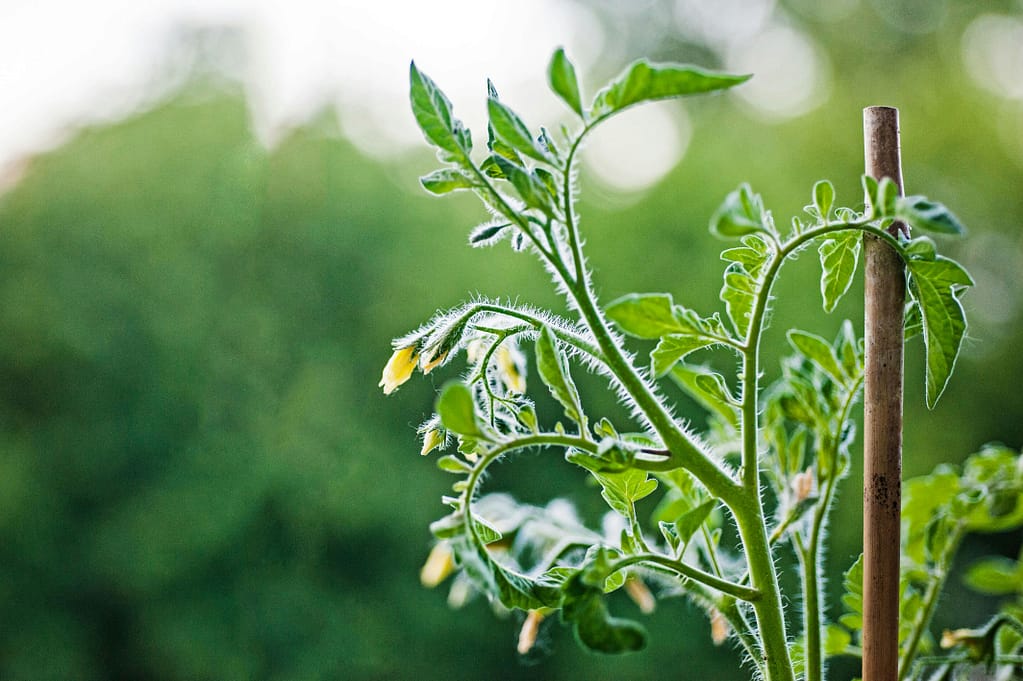
Use tomato cages or stakes to improve airflow and keep fruit off the ground.
“Supporting your tomato plants properly is one of the most important things you can do for a bigger harvest — unsupported tomato plants sprawl on the ground where fruit rots easily diseases spread rapidly and harvesting becomes difficult. A sturdy tomato cage keeps your plants upright improves air circulation around the leaves and makes harvesting ripe tomatoes quick and easy. Invest in good quality support structures at the beginning of the season and your tomato plants will reward you with significantly bigger and healthier harvests throughout the entire growing season.”
As an Amazon Associate, I earn from qualifying purchases
Encourage Pollinators
Grow bee-friendly flowers near your vegetable garden.
Helpful Resources
Before You Go – You Might Also Enjoy These Related Articles
- Why Your Vegetable Plants Are Growing Slowly – discover what is holding your plants back and simple proven ways to boost growth in Jamaica’s tropical climate
- Why Your Vegetable Plants Have Yellow Leaves – understand what yellow leaves are telling you about your plant’s health and how to restore them to full vigor
- Why Are My Vegetable Plants Wilting? – identify the most common causes of wilting in your garden and exactly how to fix each one
- How to Make Compost at Home – turn your everyday kitchen scraps and garden waste into free powerful fertilizer for your vegetable garden
- Natural pest and disease control – proven natural remedies to identify and manage common garden pests and disease safely without harsh chemicals
These guides will help you build healthier soil, solve common plant problems, and grow a more productive vegetable garden.
Conclusion
Tomato plants that fail to produce fruit can be frustrating, but the solution is often simpler than you might think. By providing enough sunlight, maintaining healthy soil, watering consistently, encouraging pollination, and protecting plants from extreme temperatures, you can greatly improve your chances of enjoying a plentiful tomato harvest.
Remember, healthy tomato plants start with healthy growing conditions. Make small improvements, monitor your plants regularly, and you’ll be well on your way to harvesting delicious homegrown tomatoes.
Did this article help you? leave your comment below in the comments section:
Happy growing 🌱