Some links in this post are affiliate links, meaning I earn a commission if you make a purchase through them. This helps support Grow & Glow Garden at no additional cost to you. I only recommend products I’ve personally tested or genuinely believe will benefit your garden. Thank you for your support
Have you noticed yellow leaves appearing on your vegetable plants and wondered what went wrong?
Yellowing leaves are one of the most common problems gardeners face. While an occasional yellow leaf isn’t always a cause for concern, widespread yellowing can signal that your plants are stressed and need attention.
The good news is that yellow leaves often provide valuable clues about what’s happening in your garden. Whether the problem is related to watering, nutrients, pests, disease, or environmental stress, identifying the cause early can help you restore your plants to good health.
In this beginner-friendly guide, you’ll learn the most common reasons vegetable plants develop yellow leaves and simple steps you can take to fix the problem.
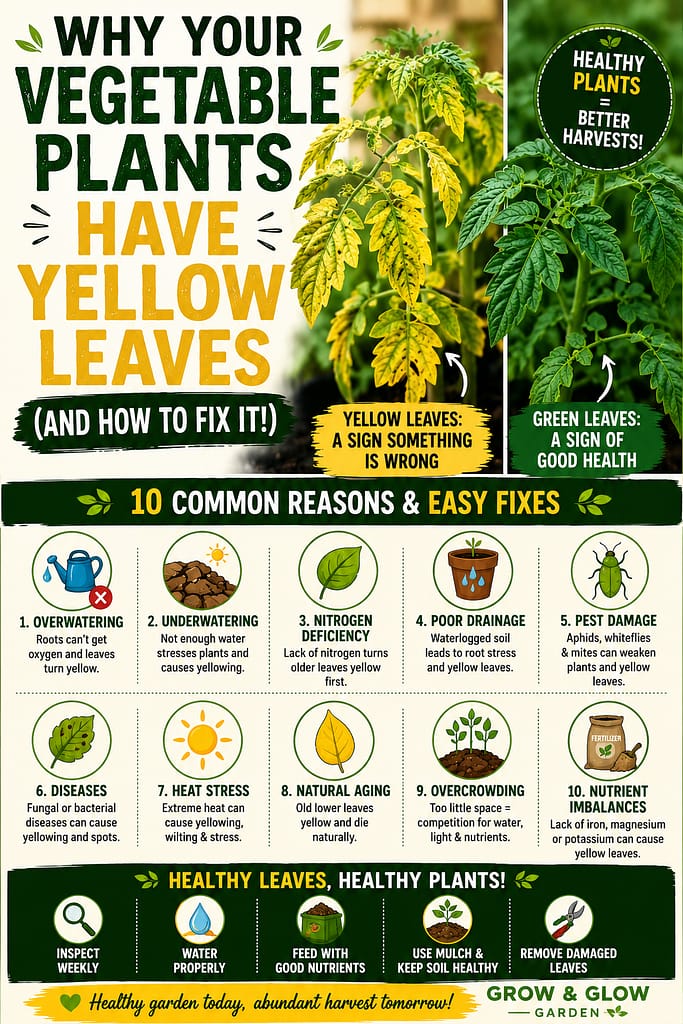
What Causes Yellow Leaves on Vegetable Plants?
Yellowing leaves, often called chlorosis, occur when plants struggle to produce enough chlorophyll—the pigment responsible for healthy green growth.
Many different issues can trigger yellow leaves, so it’s important to examine your plants carefully before choosing a solution.
1. Overwatering
One of the most common causes of yellow leaves is overwatering.
When soil remains constantly wet, plant roots cannot access the oxygen they need. As roots become stressed, leaves may begin turning yellow.
Signs of Overwatering
- Yellow lower leaves
- Wilting despite wet soil
- Mushy stems
- Slow growth
- Foul-smelling soil
How to Fix It
- Allow soil to dry slightly between waterings
- Improve drainage
- Use containers with drainage holes
- Avoid watering on a fixed schedule without checking soil moisture
2. Underwatering
Too little water can also cause leaves to yellow.
When plants don’t receive enough moisture, they struggle to transport nutrients throughout their system.
Signs of Underwatering
- Dry soil
- Crispy leaf edges
- Drooping plants
- Yellowing older leaves
How to Fix It
- Water deeply rather than frequently
- Add mulch around plants
- Check soil moisture regularly
“Whether you are struggling with overwatering or underwatering the guesswork ends with a simple soil moisture meter — an affordable tool that tells you exactly when your plants need water and when they have had enough. Simply insert it into the soil and it gives you an instant reading so you never have to guess again. It is one of the most useful and budget friendly tools any Jamaican home gardener can own.”
As an Amazon Associate I earn from qualifying purchases.
3. Nitrogen Deficiency
Nitrogen is one of the most important nutrients for healthy leafy growth.
When plants lack nitrogen, older leaves often turn yellow first while newer growth remains green.
Signs of Nitrogen Deficiency
- Pale green plants
- Yellow lower leaves
- Slow growth
- Small leaves
How to Fix It
- Add compost
- Use a balanced vegetable fertilizer
- Improve soil organic matter
4. Poor Drainage
Even if you’re watering correctly, poor drainage can create problems.
Roots sitting in waterlogged soil may become damaged, preventing them from absorbing nutrients properly.
Signs of Poor Drainage
- Constantly wet soil
- Yellow leaves
- Root rot
- Slow growth
How to Fix It
- Improve soil structure with compost
- Use raised beds
- Ensure containers drain freely
A compact small, raised garden bed kit is one of the best investments a small-space Jamaican gardener can make — it gives you full control over your soil quality, improves drainage, and allows you to grow more food in less space than a traditional ground level garden.”
5. Pest Damage
Small garden pests can weaken plants and cause yellowing foliage.
Common culprits include:
- Aphids
- Whiteflies
- Spider mites
- Thrips
Signs of Pest Problems
- Speckled leaves
- Sticky residue
- Curling foliage
- Visible insects
How to Fix It
- Inspect plants regularly
- Remove heavily damaged leaves
- Use natural pest-control methods when necessary
Pest damage is one of the most frustrating challenges any Jamaican gardener faces — but the good news is you do not need harsh chemical pesticides to protect your plants. Check out our complete guide on organic pest control solutions for raised beds for natural safe and effective ways to keep pests away from your garden without harming your plants soil or family.
6. Plant Diseases
Some fungal and bacterial diseases cause yellowing leaves.
Disease-related yellowing is often accompanied by spots, discoloration, or unusual leaf patterns.
Warning Signs
- Brown spots
- Black spots
- Mold-like growth
- Rapid leaf decline
How to Fix It
- Remove infected foliage
- Improve airflow
- Avoid wetting leaves unnecessarily
- Sanitize gardening tools
7. Heat Stress
Extreme heat can cause yellowing, especially during hot summer periods.
Plants under heat stress often struggle to absorb water efficiently.
Signs of Heat Stress
- Yellowing leaves
- Wilting during the day
- Blossom drop
- Slow growth
How to Fix It
- Water early in the morning
- Apply mulch
- Provide temporary shade during extreme heat
8. Natural Aging
Not every yellow leaf signals a problem.
As plants grow, older leaves naturally age, turn yellow, and eventually die.
Signs of Natural Aging
- Only a few lower leaves affected
- New growth remains healthy
- Plant continues growing normally
What to Do
Simply remove old leaves and continue monitoring the plant.
9. Overcrowded Plants
When vegetables are planted too closely together, they compete for:
- Water
- Nutrients
- Sunlight
- Air circulation
This competition can lead to yellowing foliage.
How to Fix It
- Thin seedlings when necessary
- Follow spacing recommendations
- Prune overcrowded growth
Overcrowding is one of the most common reasons vegetable plants struggle to grow — when plants are packed too closely together, they compete for the same nutrients water and sunlight causing slow stunted growth and reduced harvests. Getting your spacing right from the very beginning makes a huge difference — check out our detailed guide on how to space plants in a raised bed to learn exactly how far apart each vegetable should be planted for maximum growth and productivity.”
10. Nutrient Imbalances
Plants need more than just nitrogen.
Deficiencies in magnesium, iron, and potassium can also cause yellow leaves.
Common Symptoms
Iron Deficiency
New leaves turn yellow while veins remain green.
Magnesium Deficiency
Older leaves yellow between leaf veins.
Potassium Deficiency
Leaf edges become yellow or brown.
How to Fix It
- Improve soil health
- Add compost regularly
- Use fertilizers appropriately
- Test soil if problems persist
When Should You Worry About Yellow Leaves?
You should investigate further if:
- Multiple leaves are turning yellow quickly
- Entire plants are affected
- Growth has slowed dramatically
- Pests or diseases are present
- Fruit production declines
Early action often prevents bigger problems later.
Tips for Keeping Vegetable Plants Healthy
Water Properly
Avoid both overwatering and underwatering.
Feed Plants Regularly
Healthy soil supports healthy leaves.
Inspect Plants Weekly
Early detection makes problems easier to solve.
Use Mulch
Mulch helps regulate moisture and soil temperature.
Improve Airflow
Proper spacing helps reduce disease problems.
Helpful Resources
Before we wrap up you might find these related articles helpful:
- Why Your Vegetable Plants Are Growing Slowly (And How to Fix It)
- How to Water Your Vegetable Garden Properly
- Common Gardening Mistakes and How to Avoid Them
- Best Gardening Tools Every Jamaican Home Gardener Needs
- 10 Vegetables You Can Harvest Again and Again
These guides can help you build a healthier and more productive vegetable garden.
Conclusion
Yellow leaves on vegetable plants can be frustrating, but they often provide important clues about your plant’s health. By identifying the cause early and making simple adjustments, you can often restore your plants and prevent future problems.
Healthy gardens are built through observation, patience, and consistent care. Pay attention to what your plants are telling you, and you’ll become a more confident gardener with every growing season.