How to Identify and Manage Common Garden Pests and Diseases Safely and Naturally
This article contains affiliate links. If you purchase through affiliate links, I may earn a small commission at no extra cost to you. Thank you for supporting Grow & Glow Garden.
You stepped outside this morning to check on your tomato plants and something is wrong. The leaves have strange spots. There are holes where there should not be holes. Something is eating your callaloo. The tips of your pepper plant are curling in ways they should not curl. Sound familiar?
If you are growing a vegetable garden in Jamaica you are going to encounter pests and diseases — it is simply part of tropical gardening. But the good news is that you do not need harsh expensive chemical pesticides to keep your garden healthy. Natural safe and effective solutions are available using ingredients from your own kitchen and garden.
In this complete guide we cover the most common pests and diseases affecting Jamaican vegetable gardens and give you proven natural remedies to manage them safely — protecting your plants your family and the environment all at the same time.
Everything covered in this article, and much more is available in one convenient professionally designed printable PDF that you can keep in your garden for quick reference whenever you need it. Our Jamaican Garden Pests and Disease Control Guide includes detailed identification descriptions for all 14 common pests and diseases natural remedy recipes with exact measurements a quick reference chart a seasonal pest calendar for Jamaica and a complete prevention checklist — all in one easy to use guide designed specifically for Jamaican home gardeners and small farmers. Download your copy today and never be caught off guard by pests or diseases in your garden again!
Why Natural Pest Control Matters for Jamaican Gardeners
Most Jamaican home gardeners are growing food for their families — callaloo for Sunday dinner peppers for seasoning tomatoes for cooking. When you are growing food you are going to eat you want to know exactly what went on those plants. Chemical pesticides leave residues that require careful management and waiting periods before harvest. Natural pest control methods are safe to use right up to harvest day.
Beyond safety natural pest control is also more sustainable and affordable. Many of the most effective natural remedies — garlic spray scotch bonnet pepper spray soap spray — use ingredients that cost almost nothing and are available in every Jamaican kitchen. Building a garden that works with nature rather than against it is always better in the long run.
Pest damage is one of the most frustrating challenges any Jamaican gardener faces — but the good news is you do not need harsh chemical pesticides to protect your plants. Check out our complete guide on organic pest control solutions for raised beds for natural safe and effective ways to keep pests away from your garden without harming your plants soil or family.
The 8 Most Common Garden Pests in Jamaica
Here are the pests you are most likely to encounter in your Jamaican vegetable garden along with how to identify them and treat them naturally:
1. Caterpillars — The Leaf Destroyers
Caterpillars are the number one pest complaint from Jamaican home gardeners. The larvae of various moths and butterflies they can strip a leafy green plant bare in just a few days if populations are large enough. Pak choi callaloo cabbage and young seedlings are their favourite targets.
HOW TO IDENTIFY: Irregular holes chewed in leaves starting from the edges. Check leaf undersides for egg clusters. Caterpillars are often green or brown and blend perfectly with foliage — look very carefully!
NATURAL TREATMENT: Hand pick every morning and drop in soapy water. Apply neem oil spray focusing on leaf undersides. Use Bt spray — Bacillus thuringiensis — a natural biological control harmless to humans.
Pro Tip: Check your pak choi and callaloo plants every single morning — caterpillars can devastate a small plant overnight. Early detection and daily hand picking is the most effective and cheapest control method available.
If there is one natural pest control product every Jamaican home gardener and small farmer should have in their garden toolkit it is neem oil spray — a versatile all-purpose treatment that works against caterpillars aphids whiteflies spider mites mealybugs fungal diseases and much more. Regular preventative spraying every 14 days keeps most common pest and disease problems from ever becoming serious in the first place
2. Aphids — The Rapid Reproducers
Tiny soft-bodied insects that cluster on new growth sucking sap and causing leaves to curl and yellow. They reproduce so rapidly that a small colony can become a large infestation within days making early detection absolutely critical.
HOW TO IDENTIFY: Clusters of tiny insects on new shoots and leaf undersides. Sticky honeydew on leaves. Ants farming them. Curled distorted new growth.
NATURAL TREATMENT: Strong water jet to knock them off. Soap spray directly on colonies. Neem oil weekly. Encourage ladybirds which eat aphids voraciously.
3. Whiteflies — The Dry Season Pest
Tiny white flying insects on leaf undersides that cause yellowing and reduced plant vigour. Especially common on tomatoes and peppers during Jamaica’s dry season when hot dry conditions allow populations to explode rapidly.
HOW TO IDENTIFY: Cloud of white insects when plant is shaken. Powdery white insects on leaf undersides. Sticky yellowing leaves with possible sooty mold.
NATURAL TREATMENT: Yellow sticky traps hung near plants. Neem oil spray on leaf undersides every 7 days. Reflective silver mulch around plants.
One of the simplest and most effective ways to control whiteflies aphids and many other flying insects in your Jamaican garden is to hang yellow sticky traps near your affected plants. Flying insects are strongly attracted to the bright yellow color and get stuck when they land — dramatically reducing pest populations without any spraying or chemicals whatsoever. They are inexpensive reusable until full and work around the clock even when you are not in the garden.
4. Slugs and Snails — The Rainy Season Raiders
Most active during Jamaica’s rainy season when warm wet conditions cause populations to explode. They feed at night destroying seedlings and leafy vegetables leaving telltale slime trails and ragged holes in leaves.
HOW TO IDENTIFY: Slime trails on leaves and soil. Irregular holes near base of plants. Damage worst after rainy nights. Find them under pots and boards at night.
NATURAL TREATMENT: Beer traps set at soil level. Crushed eggshells around plant bases. Diatomaceous earth sprinkled on soil. Hand pick at night with a torch.
One of the most effective and completely natural controls for slugs snails cutworms and many other crawling pests is food grade diatomaceous earth — a fine powder made from fossilized algae whose microscopic sharp edges damage the soft bodies of crawling insects causing them to dehydrate. It is completely safe for humans pets and children making it perfect for Jamaican food gardens where safety is the top priority.”
As an Amazon Associate, I earn from qualifying purchases
5. Spider Mites — The Invisible Menace
Microscopic pests that thrive in Jamaica’s dry season heat. They cause stippled yellowing leaves and fine webbing in severe infestations and can rapidly weaken entire plants if left untreated.
HOW TO IDENTIFY: Tap leaf over white paper — tiny moving specks indicate mites. Dusty speckled leaf appearance. Fine webbing on leaves and stems.
NATURAL TREATMENT: Strong water spray on leaf undersides. Neem oil every 5 days. Increase humidity with misting. Remove severely infested leaves.
6. Cutworms — The Overnight Killers
Soil-dwelling larvae that sever young seedling stems at soil level overnight leaving gardeners puzzled by plants that were perfectly healthy the evening before. Most damaging to newly transplanted seedlings.
HOW TO IDENTIFY: Seedling collapsed at soil level with stem completely cut through. Fat grey or brown caterpillar found curled in soil near collapsed plant.
NATURAL TREATMENT: Bottle collars pushed into soil around each seedling. Diatomaceous earth on soil surface. Hand pick from soil in evenings.
7. Mealybugs — The Cottony Colonisers
White cottony masses in leaf joints and on stems. Common on tomatoes peppers and fruiting vegetables in Jamaica and can be difficult to eliminate once populations become well established.
HOW TO IDENTIFY: White fluffy cottony masses in protected plant areas. Plants look weak with yellowing curling leaves and reduced overall vigour.
NATURAL TREATMENT: Alcohol on cotton swab dabbed directly on colonies. Neem oil spray to entire plant. Soap spray on affected areas.
8. Root Knot Nematodes — The Hidden Root Destroyers
Microscopic soil worms that cause knobby galls on roots reducing plant vigour and yields dramatically. Widespread in Jamaican soils and one of the most underdiagnosed causes of poor garden performance.
HOW TO IDENTIFY: Knobby galls on roots that cannot be rubbed off. Plants stunted and yellowing despite adequate watering and feeding.
NATURAL TREATMENT: Grow French marigolds as companion plants. Beneficial nematodes applied to soil. Strict crop rotation every season without exception.
5 Most Common Plant Diseases in Jamaican Gardens
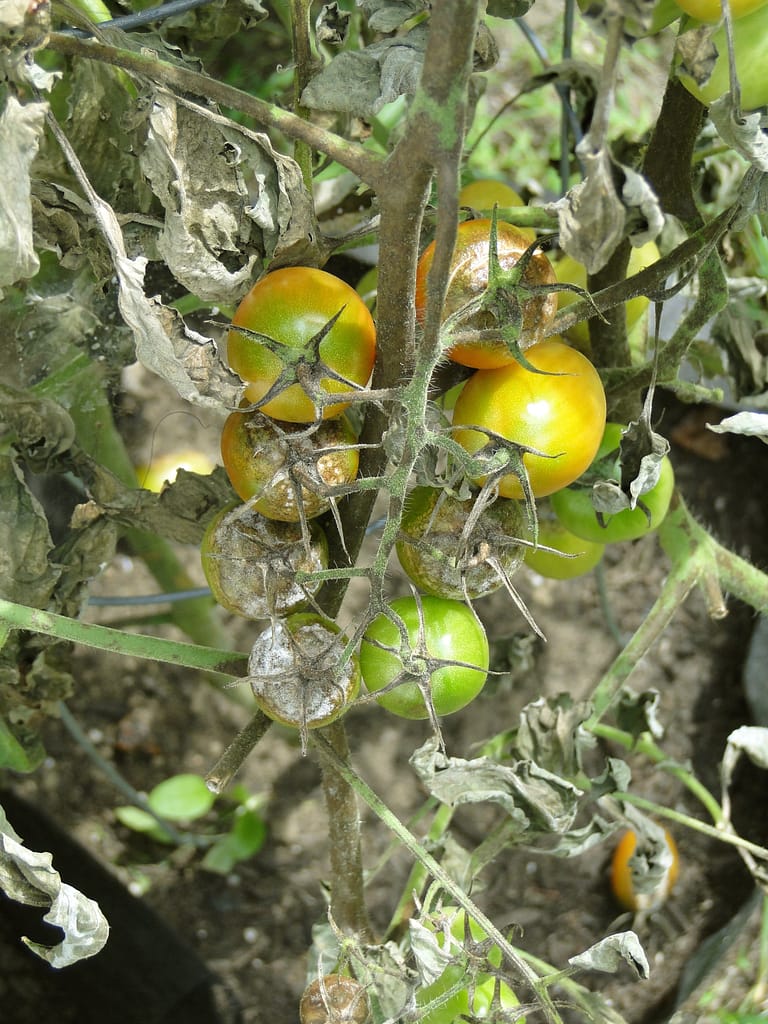
1. Powdery Mildew
White powdery coating on leaves that spreads rapidly in warm humid conditions. Very common during Jamaica’s rainy season and one of the most visually distinctive diseases you will encounter.
NATURAL TREATMENT: Baking soda spray — 1 tablespoon per litre of water with dish soap drops — every 7 days. Neem oil spray. Improve air circulation through pruning. Remove affected leaves.
2. Early and Late Blight
Devastating fungal disease on tomatoes and potatoes and one of the most serious disease threats for Jamaican tomato growers. Spreads extremely rapidly during wet weather and can destroy an entire crop within days.
NATURAL TREATMENT: Copper fungicide spray applied preventatively. Remove affected plant parts immediately. Water at base never overhead. Mulch heavily around plants.
3. Damping Off
Fungal disease that kills seedlings at soil level overnight. Caused by overwatering and poor drainage and one of the most common causes of seedling failure for Jamaican home gardeners.
NATURAL TREATMENT: Improve drainage. Sprinkle cinnamon on soil surface — natural antifungal. Use fresh sterile potting mix. Water carefully and sparingly.
4. Fusarium and Verticillium Wilt
Soil-borne fungal diseases that block plant water vessels causing irreversible wilting and plant death. Persistent in Jamaican soils and preventable only through strict crop rotation and soil management.
NATURAL TREATMENT: Remove infected plants immediately — never compost. Do not plant susceptible crops in same location for 3 years. Soil solarize between crops using clear plastic.
5. Mosaic Virus
Viral disease transmitted by aphids and whiteflies causing distinctive mottled leaf patterns. There is no cure — prevention through controlling the insects that spread it is the only management strategy available.
NATURAL TREATMENT: Control aphid and whitefly populations. Remove infected plants immediately. Reflective mulch deters virus-spreading insects.
5 Essential Natural Spray Recipes Every Jamaican Gardener Needs
These homemade spray recipes use ingredients available in any Jamaican kitchen and are completely safe for your family your pets and the environment:
1. Neem Oil Spray — The All-Purpose Protector
Works against aphids whiteflies caterpillars spider mites mealybugs and fungal diseases. The single most useful spray in your natural pest control toolkit.
RECIPE: 2 tablespoons neem oil + 1 teaspoon dish soap + 1 litre warm water. Spray all plant surfaces especially leaf undersides. Apply every 7 to 14 days as prevention.
“The key ingredient in this recipe is good quality neem oil — and not all neem oils are created equal. For the best results look for pure cold-pressed neem oil concentrate which contains the highest levels of active azadirachtin — the compound that makes neem oil so effective against pests and diseases. A concentrated bottle goes a very long way when diluted properly making it one of the most cost-effective natural pest control products available for your Jamaican garden.
As an Amazon Associate, I earn from qualifying purchases
2. Garlic Spray — Kitchen Cabinet Pest Repellent
Using ingredients from every Jamaican kitchen garlic spray repels and kills aphids caterpillars whiteflies and many other common garden pests naturally and safely.
RECIPE: Blend 10 to 12 garlic cloves with 500ml water. Strain well. Add to 1 litre water with a few drops of dish soap. Spray on plants every 5 to 7 days and after rain.
3. Scotch Bonnet Pepper Spray — Jamaica’s Own Pest Deterrent
Jamaica’s own scotch bonnet peppers make one of the most potent natural pest deterrents available anywhere in the world. Deters insects rats mongooses and other pests effectively.
RECIPE: Blend 6 to 8 scotch bonnet peppers with 500ml water wearing gloves. Strain well. Add to 1 litre water with dish soap. Spray around plants weekly. Wash hands thoroughly after use.
4. Baking Soda Fungal Spray
Simple effective and food-grade — baking soda spray controls powdery mildew and other common fungal diseases that are so prevalent during Jamaica’s rainy season.
RECIPE: 1 tablespoon baking soda + 1 tablespoon vegetable oil + 1 teaspoon dish soap + 1 litre water. Apply every 7 days during humid weather.
5. Simple Soap Spray
The simplest and most immediately available natural pest control — effective against soft-bodied insects including aphids mealybugs whiteflies and spider mites.
RECIPE: 2 tablespoons plain dish soap + 1 litre water. Spray directly on pest colonies. Rinse plants with clean water after a few hours.
Prevention — Your Most Powerful Tool
Prevention is always easier more effective and less costly than treatment. Here are the most important preventative strategies for keeping your Jamaican vegetable garden healthy year-round:
- Inspect plants every morning — 5 minutes daily saves hours of treatment later
- Practice crop rotation — never plant the same family in the same spot two seasons in a row
- Maintain good air circulation — space plants properly and prune overcrowded growth
- Water at the base of plants — never overhead water as wet leaves encourage fungal disease
- Mulch garden beds — prevents soil splash that spreads many soil-borne diseases
- Remove plant debris regularly — dead leaves and stems harbour pests and disease
- Feed your soil with compost — healthy soil produces naturally resilient disease-resistant plants
- Grow companion plants — marigolds basil and other companion plants deter many pests naturally
- Apply neem oil preventatively — regular spraying every 14 days prevents most problems before they start
Pro Tip: The single most effective pest prevention strategy for any Jamaican gardener is a daily 5-minute morning inspection of your garden. Catching problems early when they are small makes treatment simple. Waiting until damage is severe makes treatment much harder and more expensive.
Get the Complete Printable Pest and Disease Control Guide
Want all of this information plus much more in one convenient professionally designed printable format you can keep in your garden for quick reference?
Our Jamaican Garden Pests and Disease Control Guide gives you:
- Complete pest and disease identification descriptions for all 14 common problems
- Full natural remedy recipes with exact measurements
- Color coded identification and treatment boxes for fast problem solving
- Quick reference chart — identify and treat any problem at a glance
- Seasonal pest and disease calendar for Jamaica
- Prevention checklist for year-round garden health
Want to get fully equipped for a healthy and productive Jamaican garden? Our Jamaican Gardener Complete Starter Bundle gives you both of our essential digital guides together at a special bundle price — the Jamaican Farmer and Gardener Expense and Income Tracker to keep your garden finances organized plus the Jamaican Garden Pests and Disease Control Guide to keep your plants healthy and protected — everything you need to grow confidently and successfully in Jamaica’s tropical climate!”
Before we wrap up you might find these related articles helpful:
- Best Vegetables to Grow in Jamaica Dry Season
- How to Make Compost at Home Jamaica
- Best Gardening Tools Every Jamaican Home Garden Needs
- Why Are My Vegetable Plants Wilting
- How to Water Your Vegetable Garden Properly
- Common Garden Mistakes and How to Avoid Them
These guides can help you build a healthier and more productive vegetable garden.
Conclusion
Managing pests and diseases in your Jamaican vegetable garden does not have to mean reaching for chemical pesticides. With daily observation quick action and the natural remedies covered in this guide you can keep your garden healthy and productive using safe affordable ingredients that are already in your kitchen.
Remember that prevention is always easier than treatment. Daily garden inspections healthy soil good air circulation and preventative neem oil spraying will prevent most problems before they become serious. Take care of your garden and your garden will take care of your family!
Did this article help you identify and treat a pest or disease problem in your garden? Leave a comment below — I read and respond to every single one and would love to hear how your garden is doing. Thank you for reading and happy growing! 🌱