Some links in this post are affiliate links, meaning I earn a commission if you make a purchase through them. This helps support Grow & Glow Garden at no additional cost to you. I only recommend products I’ve personally tested or genuinely believe will benefit your garden. Thank you for your support
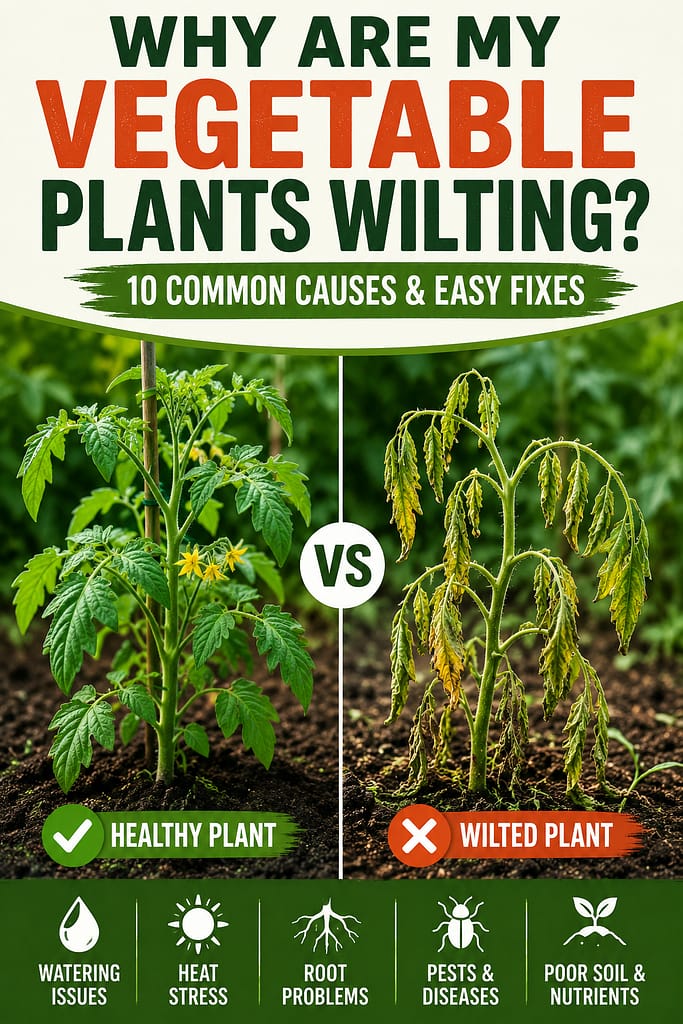
Have you ever walked into your garden and noticed your vegetable plants suddenly drooping or looking lifeless?
Wilting is one of the most alarming sights for gardeners. A healthy plant that looked fine yesterday can suddenly develop limp leaves and drooping stems, leaving you wondering what went wrong.
The good news is that wilting doesn’t always mean your plants are dying. In many cases, the problem can be identified and corrected before permanent damage occurs.
In this guide, you’ll learn the most common reasons vegetable plants wilt and the practical steps you can take to restore them to health.
What Does Wilting Mean?
Wilting occurs when a plant loses more water than it can absorb through its roots.
When this happens, leaves and stems lose their firmness and begin to droop.
However, wilting isn’t always caused by lack of water. Several other factors can prevent plants from taking up moisture properly.
Understanding the cause is the first step toward fixing the problem.
1. Underwatering
One of the most common causes of wilting is simply not providing enough water.
When soil becomes too dry, roots cannot supply the plant with the moisture it needs to remain upright.
Signs of Underwatering
- Dry soil several inches below the surface
- Drooping leaves
- Crispy leaf edges
- Slow growth
- Small fruits
How to Fix It
- Water deeply rather than lightly
- Check soil moisture regularly
- Apply mulch to help retain moisture
- Water early in the morning
“Whether you are struggling with overwatering or underwatering the guesswork ends with a simple soil moisture meter — an affordable tool that tells you exactly when your plants need water and when they have had enough. Simply insert it into the soil and it gives you an instant reading so you never have to guess again. It is one of the most useful and budget friendly tools any Jamaican home gardener can own.”
“As an Amazon Associate, I earn from qualifying purchases”
2. Overwatering
Many gardeners are surprised to learn that too much water can cause wilting.
When soil stays constantly wet, roots struggle to absorb oxygen, making it difficult for plants to take up water properly.
Signs of Overwatering
- Wilting despite wet soil
- Yellow leaves
- Mushy stems
- Foul-smelling soil
How to Fix It
- Reduce watering frequency
- Improve drainage
- Use raised beds or containers with drainage holes
- Allow soil to dry slightly between waterings
A, raised garden bed kit is one of the best investments a small-space gardener can make — it gives you full control over your soil quality, improves drainage, and allows you to grow more food in less space than a traditional ground level garden.”
3. Heat Stress
Vegetable plants often wilt during extremely hot weather, especially in tropical climates.
High temperatures increase water loss through leaves faster than roots can replace it.
Signs of Heat Stress
- Wilting during the hottest part of the day
- Recovery during evening hours
- Dry soil
- Blossom drop
How to Fix It
- Water deeply in the morning
- Apply mulch
- Provide temporary shade during heat waves
- Avoid watering during the hottest hours
4. Root Damage
Healthy roots are essential for healthy plants.
Damaged roots cannot absorb water effectively, leading to wilting even when soil moisture is adequate.
Common Causes of Root Damage
- Digging too close to plants
- Pest damage
- Root rot
- Transplanting mistakes
How to Fix It
- Avoid disturbing roots unnecessarily
- Handle seedlings carefully during transplanting
- Improve soil drainage
- Monitor for pests
5. Transplant Shock
Newly transplanted vegetables often wilt temporarily as they adjust to their new environment.
This is especially common with tomatoes, peppers, cucumbers, and eggplants.
Signs of Transplant Shock
- Wilting shortly after planting
- Slowed growth
- Temporary leaf drop
How to Fix It
- Keep soil consistently moist
- Protect young plants from intense sunlight
- Avoid fertilizing immediately after transplanting
- Give plants time to recover
6. Pest Problems
Certain pests damage roots, stems, or leaves and can cause plants to wilt.
Common Garden Pests
- Aphids
- Cutworms
- Root-knot nematodes
- Spider mites
Signs of Pest Damage
- Visible insects
- Chewed leaves
- Stunted growth
- Wilting despite proper watering
How to Fix It
- Inspect plants regularly
- Remove heavily infested leaves
- Use natural pest-control methods
- Encourage beneficial insects
Pest damage is one of the most frustrating challenges any Jamaican gardener faces — but the good news is you do not need harsh chemical pesticides to protect your plants. Check out our complete guide on organic pest control solutions for raised beds for natural safe and effective ways to keep pests away from your garden without harming your plants soil or family.
7. Plant Diseases
Several diseases interfere with water movement inside plants, causing wilting.
Common Diseases
- Fusarium wilt
- Bacterial wilt
- Verticillium wilt
Warning Signs
- Sudden wilting
- Yellowing leaves
- Stem discoloration
- Progressive decline
How to Fix It
- Remove severely infected plants
- Improve garden sanitation
- Rotate crops annually
- Avoid overcrowding
8. Poor Soil Conditions
Compacted or unhealthy soil can limit root growth and reduce water absorption.
Signs of Poor Soil
- Slow growth
- Wilting after watering
- Hard, compacted ground
- Poor drainage
How to Fix It
- Add compost regularly
- Avoid walking on garden beds
- Improve soil structure with organic matter
- Test soil when necessary
“One of the most effective ways to take the guesswork out of soil problems is to test your soil before planting. A Rapitest Soil Test Kit gives you fast and accurate readings of your soil’s pH nitrogen phosphorus and potassium levels right at home — no laboratory needed. Knowing exactly what your soil is missing allows you to make the right corrections and give your vegetable plants the perfect growing environment they need to thrive.”
“As an Amazon Associate, I earn from qualifying purchases”
9. Container Gardening Challenges
Container-grown vegetables dry out faster than plants grown directly in the ground.
Small containers are particularly vulnerable during hot weather.
Signs of Container Stress
- Frequent wilting
- Rapid soil drying
- Stunted growth
How to Fix It
- Use larger containers
- Water more frequently when needed
- Add mulch to container surfaces
- Choose quality potting mix
10. Natural Midday Wilting
Not all wilting is a problem.
Some plants temporarily wilt during the hottest part of the day and recover as temperatures cool.
When It’s Normal
- Plants recover by evening
- Growth remains healthy
- Leaves appear normal the next morning
What to Do
Monitor plants closely but avoid overwatering if recovery occurs naturally.
When Should You Be Concerned?
You should investigate further if:
- Plants remain wilted overnight
- Leaves begin turning yellow or brown
- Growth slows significantly
- Multiple plants are affected
- Fruits stop developing
Persistent wilting usually signals an underlying issue that requires attention.
Tips to Prevent Wilting in Vegetable Gardens
Water Consistently
Avoid allowing soil to become extremely dry or waterlogged.
Mulch Your Garden
Mulch helps regulate soil temperature and retain moisture.
Improve Soil Health
Healthy soil supports strong root systems.
Check Plants Frequently
Early detection makes problems easier to solve.
Avoid Overcrowding
Proper spacing improves airflow and reduces disease pressure.
Overcrowding is one of the most common reasons vegetable plants struggle to grow — when plants are packed too closely together, they compete for the same nutrients water and sunlight causing slow stunted growth and reduced harvests. Getting your spacing right from the very beginning makes a huge difference — check out our detailed guide on how to space plants in a raised bed to learn exactly how far apart each vegetable should be planted for maximum growth and productivity.”
Helpful Resources
You may also enjoy:
- Why Your Vegetable Plants Are Growing Slowly
- Why Your Vegetable Plants Have Yellow Leaves
- How to Water Your Vegetable Garden properly
- Common Gardening Mistakes
- How to Deal with Pests in Your Vegetable Garden
These guides can help you diagnose common garden problems and keep your vegetable plants thriving.
Conclusion
Wilting vegetable plants can be worrying, but the cause is often easier to identify than you might think. Whether the issue is watering, heat stress, pests, poor soil, or disease, taking action early can help restore your plants and prevent future problems.
Remember that healthy soil good watering practices and daily observation are the foundation of a thriving Jamaican garden. Take care of your soil take care of your watering routine and check on your plants every day — and wilting will become a rare visitor rather than a regular problem in your garden.
Did this article help you identify why your vegetable plants are wilting? Leave a comment below and let me know — I read and respond to every comment and would love to hear how your garden is doing. Thank you for reading and happy growing!