“Some links in this post are affiliate links, meaning I earn a commission if you make a purchase through them. This helps support Grow & Glow Garden at no additional cost to you. I only recommend products I’ve personally tested or genuinely believe will benefit your garden. Thank you for your support “
Few things frustrate beginner gardeners more than planting vegetables with excitement only to watch them grow slowly or struggle to thrive. You water them, check them daily, and wait patiently, but the plants still seem weak, small, or stunted.
The good news is that slow vegetable growth is usually caused by a few common problems that can often be fixed with simple changes.
Whether you grow vegetables in containers, raised beds, or a backyard garden, understanding what affects plant growth can help you create healthier, faster-growing plants and improve your harvests.
In this guide, you’ll learn the most common reasons vegetable plants grow slowly and simple beginner-friendly ways to fix them.
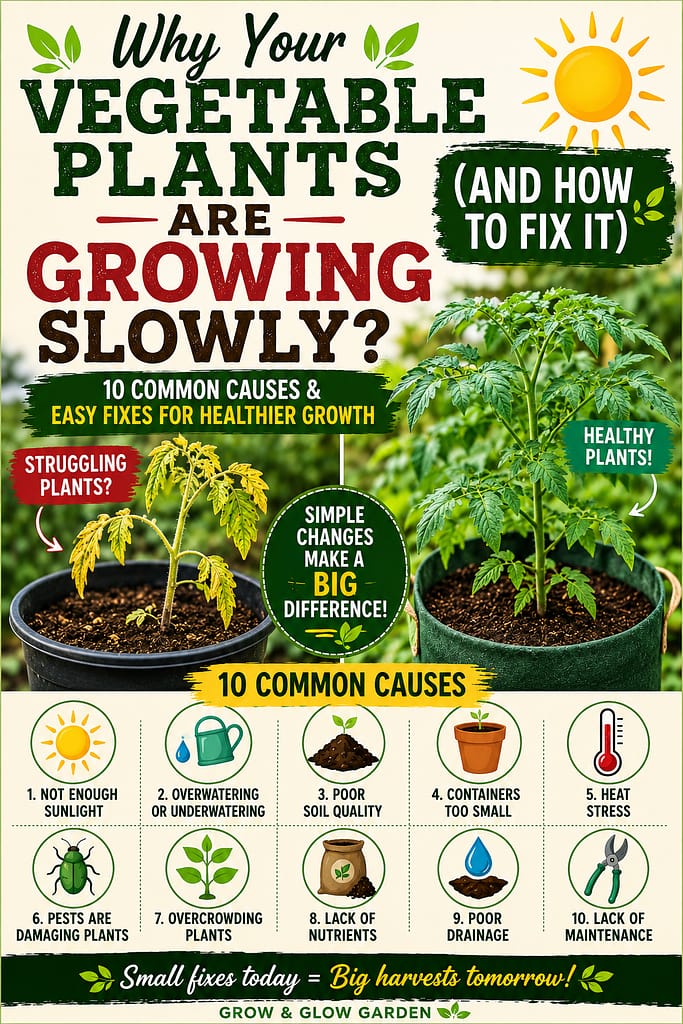
1. Your Plants Are Not Getting- Enough Sunlight
Most vegetables need plenty of sunlight to grow properly.
Why Sunlight Matters
Vegetables use sunlight to produce energy through photosynthesis. Without enough sunlight, plants often become:
- weak
- pale
- leggy
- slow-growing
Many vegetables require:
6–8 hours of direct sunlight daily.
Signs of Low Sunlight
- Thin stems
- Small leaves
- Leaning plants
- Slow growth
- Poor harvests
How to Fix It
- Move containers to sunnier locations
- Trim nearby plants blocking sunlight
- Use reflective surfaces carefully
- Choose the brightest area in your yard
Leafy greens tolerate partial shade better than crops like tomatoes and peppers.
2. Overwatering or Underwatering
Improper watering is one of the most common gardening mistakes.
Overwatering Problems
Too much water can:
- suffocate roots
- encourage root rot
- slow plant growth
- attract fungal diseases
Signs of Overwatering
- Yellow leaves
- Drooping plants
- Soggy soil
- Mushy stems
Underwatering Problems
Too little water stresses plants and slows development.
Signs of Underwatering
- Dry soil
- Wilting leaves
- Crispy leaf edges
- Stunted growth
“Whether you are struggling with overwatering or underwatering the guesswork ends with a simple soil moisture meter — an affordable tool that tells you exactly when your plants need water and when they have had enough. Simply insert it into the soil and it gives you an instant reading so you never have to guess again. It is one of the most useful and budget friendly tools any Jamaican home gardener can own.”
As an Amazon Associate, I earn from qualifying purchases
How to Fix It
- Water deeply instead of lightly
- Check soil moisture before watering
- Use mulch to help retain moisture
- Improve drainage if soil stays soggy
Container plants usually need more frequent watering than in-ground gardens.
“One of the simplest and most effective ways to water your garden correctly is by using a good quality watering can – it delivers a gently even spray that is perfect for seedling and delicate plants without disturbing the soil or damaging young roots.”
3. Poor Soil Quality
Healthy soil is one of the biggest secrets to successful gardening.
If soil lacks nutrients, vegetable plants may struggle to grow properly.
Common Soil Problems
- Compact soil
- Poor drainage
- Lack of organic matter
- Nutrient deficiencies
“Poor soil quality is one of the leading causes of slow vegetable growth in Jamaican gardens — compacted clay-heavy soil, nutrient deficient ground, and poor drainage all prevent plants from reaching their full potential. If you are growing in a raised bed or container, check out our complete guide on the best soil mix for raised bed to make sure your plants have the perfect growing environment from day one.”
How to Fix It
- Add compost regularly
- Use quality garden soil
- Avoid heavily compacted soil
- Mix organic matter into planting areas
Healthy soil improves:
- root growth
- moisture retention
- nutrient absorption
4. Containers Are Too Small
Small containers can limit root growth and reduce plant size.
Why Container Size Matters
Roots need enough space to:
- absorb nutrients
- access water
- support healthy growth
Crowded roots can slow plant development significantly.
How to Fix It
Choose containers appropriate for the crop size.
Examples
- lettuce = smaller containers
- tomatoes = large deep containers
- peppers = medium to large containers
Grow bags and larger pots often improve plant performance.
Container gardening is like putting the whole gardening world in a pot. It’s booming, especially among folks living in apartments or homes with tiny yards check out our guide on best plants for container gardening planting in containers lets you enjoy the perks of gardening without needing a sprawling backyard.
5. Heat Stress
Extreme heat can slow vegetable growth, especially during hot tropical weather.
Signs of Heat Stress
- Wilted leaves
- Drooping plants
- Dry soil quickly
- Blossom drop
- Slow fruit production
How to Fix It
- Water early in the morning
- Add mulch around plants
- Provide light afternoon shade when necessary
- Avoid watering during extreme midday heat
Tropical gardeners may need to adjust watering schedules during very hot periods.
6. Pests Are Damaging Your Plants
Some pests damage plants slowly, making growth problems harder to notice at first.
Common Garden Pests
- aphids
- caterpillars
- whiteflies
- spider mites
Signs of Pest Problems
- Holes in leaves
- Curling leaves
- Sticky residue
- Yellowing foliage
- Damaged stems
How to Fix It
- Inspect plants regularly
- Remove pests early
- Use natural pest control methods
- Keep the garden clean and healthy
Healthy plants often recover faster from minor pest damage.
Figuring out the best organic pest control can feel like navigating a maze with so many options pulling at you the key is to weigh your choices based on effectiveness check out this guide on organic pests control solution ease of use, and overall impact on your crops and surroundings.
7. Plants Are Overcrowded
Too many plants in one area create competition.
Overcrowding can reduce:
- airflow
- sunlight exposure
- nutrient access
- water availability
Signs of Overcrowding
- Small plants
- Weak growth
- Increased disease problems
- Poor harvests
How to Fix It
- Follow proper plant spacing
- Thin seedlings when needed
- Avoid overfilling containers
Good airflow helps plants stay healthier and stronger.
“Overcrowding is one of the most common mistakes gardeners make — when plants are packed too closely together they compete for nutrients, water, and sunlight which slows growth significantly and reduces your overall harvest. If you are just getting started learning about proper plant spacing and garden layout our guide on raised bed gardening for beginners covers everything you wish you knew before your first planting!”
8. Your Plants Need Nutrients
Vegetables are heavy feeders and may require extra nutrients during growth.
Common Nutrient Deficiency Signs
- Yellow leaves
- Weak stems
- Small vegetables
- Slow development
How to Fix It
- Add compost
- Use balanced fertilizer carefully
- Avoid overfertilizing
- Feed plants consistently during the growing season
Organic compost is one of the best beginner-friendly soil boosters.
9. Poor Drainage Is Hurting Roots
Vegetables dislike sitting in waterlogged soil.
Poor drainage can damage roots and slow growth significantly.
Signs of Drainage Problems
- Standing water
- Constantly wet soil
- Yellow leaves
- Root rot smell
How to Fix It
- Use raised beds
- Improve soil texture
- Add compost
- Ensure containers have drainage holes
Raised beds often improve drainage in tropical rainy seasons.
10. Plants Need Regular Maintenance
Sometimes plants simply need better overall care.
Helpful Maintenance Habits
- Remove dead leaves
- Prune damaged growth
- Harvest vegetables regularly
- Watch for early problems
Consistent garden care helps plants stay productive and healthy.
“Developing good maintenance habits is what separates a thriving productive garden from one that struggles season after season. The good news is that regular garden maintenance does not have to be complicated or time consuming — with the right tools and a simple weekly routine you can keep your vegetable garden in excellent condition all year round. A quality garden tool set is the foundation of any good maintenance routine — giving you everything you need in one convenient kit to loosen soil, remove weeds, and keep your garden beds neat and productive. Equally important is a sharp reliable pair of pruning shears — used regularly to trim dead and yellowing leaves, cut back overgrown stems, and harvest vegetables cleanly without damaging the plant. Together these two tools will handle the majority of your weekly garden maintenance tasks and make the whole process faster and more enjoyable.”
As an Amazon Associate, I earn from qualifying purchases
Tips for Faster, Healthier Vegetable Growth
Use Compost Regularly
Compost improves soil naturally.
Water Consistently
Avoid extreme wet and dry cycles.
Mulch Around Plants
Mulch helps retain moisture and reduce weeds.
Choose Beginner-Friendly Vegetables
Easy vegetables often grow faster and stronger.
Monitor Plants Often
Catching problems early makes them easier to fix.
Helpful Resources
You may also enjoy:
- How to Water Your Vegetable Garden Properly
- Common Gardening Mistakes and How to Avoid Them
- Best Vegetables to Grow in Small Spaces
- Best Gardening Tools Every Jamaican Home Gardener Needs
- 10 Vegetables You Can Harvest Again and Again
These beginner-friendly guides can help you grow a healthier and more productive garden.
Conclusion
Slow-growing vegetable plants can be frustrating, but many common gardening problems are easy to fix once you understand the cause. By improving sunlight, watering habits, soil quality, spacing, and overall plant care, you can help your vegetable garden grow healthier and more productive.
Gardening takes patience, but small improvements often lead to big results over time. Keep learning, observe your plants carefully, and enjoy the process of growing your own fresh vegetables at home.
“Did this article help you identify why your vegetable plants are growing slowly? Leave a comment below and let me know — I read and respond to every comment and would love to hear how your garden is doing. Thank you for reading and happy growing!