“Some links in this post are affiliate links, meaning I earn a commission if you make a purchase through them. This helps support Grow & Glow Garden at no additional cost to you. I only recommend products I’ve personally tested or genuinely believe will benefit your garden. Thank you for your support“
Growing your own food in Jamaica is one of the most rewarding things you can do — whether you have a large farm, a backyard garden, or just a few pots. But having the right tools can make the difference between a garden that thrives and one that becomes a frustrating, backbreaking experience.
The good news is you do not need expensive, fancy equipment to have a productive Jamaican garden. In this guide we are going to walk you through the essential gardening tools every Jamaican home gardener need, what each one is used for, and where you can get them — including online options that ship right to your door.
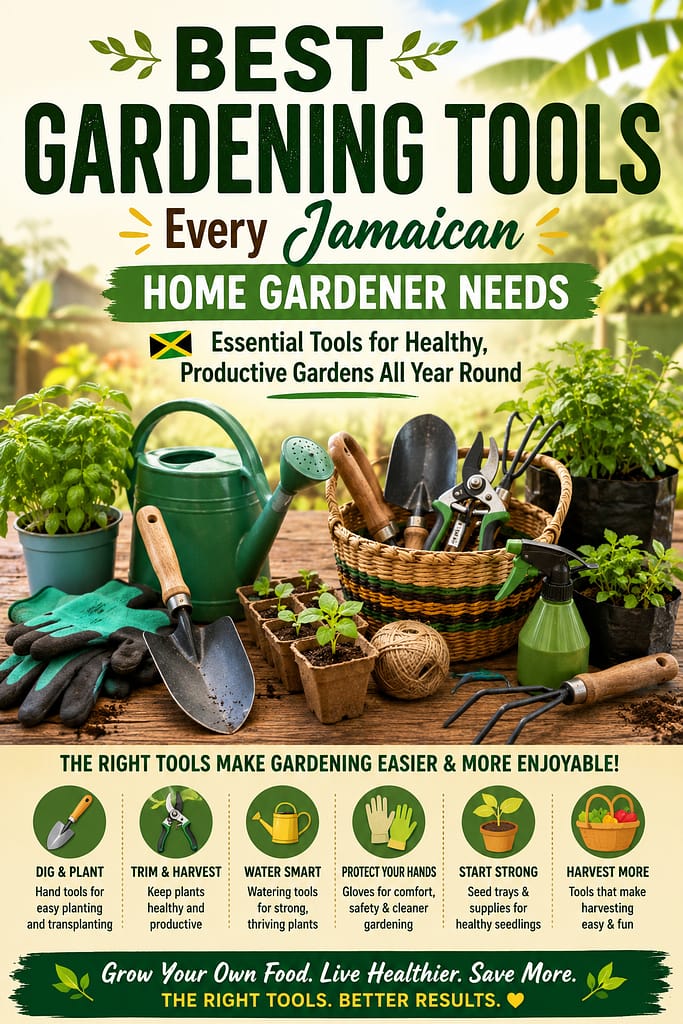
Why Having the Right Gardening Tools Matters
Many beginner gardeners in Jamaica try to make do with whatever they have on hand — an old cutlass, a rusty fork, or even their bare hands. While resourcefulness is a great quality, using the wrong tools makes gardening harder and less enjoyable than it needs to be.
The right tools will:
- Save you time and energy in the garden
- Help you work more efficiently, especially in Jamaica’s tough, clay-heavy soils
- Reduce physical strain on your back, knees, and hands
- Give you better results — healthier plants, cleaner beds, and bigger harvests
- Last for years when properly maintained
“Whether you are growing tomatoes, okra, callaloo or scotch bonnet peppers during the dry season the right tools will makes all the difference in your garden”
Investing in a few quality tools is one of the best decisions you can make as a gardener. Let us look at what you actually need.
The Essential Gardening Tools for Jamaican Home Gardeners
1. Garden Trowel
A garden trowel is the single most used tool in any home garden. It is a small, handheld shovel that is perfect for digging small holes for transplanting seedlings, mixing soil and compost, planting seeds, and scooping soil into pots and containers.
For Jamaican gardeners growing in containers, raised beds, or small backyard plots, a good quality trowel is absolutely essential. Look for one with a stainless steel blade and a comfortable ergonomic handle — your hands will thank you after a long session in the garden.
What to Look For:
- Stainless steel or carbon steel blade — resists rust in humid Jamaican conditions
- Ergonomic non-slip handle — reduces hand fatigue
- Depth markings on the blade — helps you plant seeds at the correct depth
Pro Tip: After each use, wipe your trowel clean and rub a little cooking oil on the blade to prevent rusting in Jamaica’s humid climate.
2. Garden Fork (Hand Fork)
A garden fork — also called a hand cultivator — is a small handheld tool with three or four short prongs. It is used for loosening and aerating compacted soil, mixing compost and fertilizer into the ground, removing weeds by getting under the roots, and breaking up clumps of hard Jamaican clay soil.
Jamaica’s soil, especially in parishes like St. Catherine and Clarendon, can become very hard and compacted during the dry season. A garden fork is one of the most effective tools for breaking up that soil and making it workable again without having to use heavy machinery.
What to Look For:
- Strong steel prongs that will not bend in hard soil
- A comfortable handle with good grip
- A set that includes both a trowel and fork together — usually better value
Pro Tip: Use your garden fork to lightly aerate the soil around your vegetable plants every 2 to 3 weeks. This improves drainage and helps roots breathe — especially important during the rainy season.
“As an Amazon Associate I earn from qualifying purchases”
3. Pruning Shears / Garden Scissors
Pruning shears — also called secateurs or garden scissors — are one of the most versatile tools in the garden. Every Jamaican home gardener needs a good pair. They are used for harvesting vegetables and herbs cleanly without damaging the plant, trimming dead or diseased branches and leaves, cutting back overgrown plants to encourage new growth, and harvesting scotch bonnet peppers, callaloo, and herbs without pulling and uprooting the whole plant.
Using your hands to pull vegetables and herbs off the plant can damage the stem and leave the plant vulnerable to disease. A clean cut with sharp pruning shears is always better for the long-term health of your plants.
“Pruning shears are absolutely essential for harvesting herbs like thyme, rosemary, and basil cleanly without damaging the plant”
What to Look For:
- Sharp stainless steel blades — essential for clean cuts
- Safety lock mechanism — important for safe storage
- Comfortable spring-loaded handles — reduces hand fatigue during long harvests
- Easy to sharpen and clean
Pro Tip: Keep your pruning shears sharp! Dull blades crush stems instead of cutting cleanly, which opens the plant up to disease. Use a small whetstone to sharpen the blade every few weeks.
4. Watering Can
In Jamaica’s dry season, getting water to your plants efficiently is one of your most important jobs as a gardener. A good watering can gives you control over exactly how much water each plant receives, which is critical for young seedlings, container plants, and delicate herbs that can be easily damaged by a heavy stream of water from a hose.
For home gardeners with small to medium sized gardens, a 2 gallon or 5 litre watering can is the perfect size — large enough to reduce how many trips you make to refill, but not so heavy that it becomes difficult to carry when full.
What to Look For:
- A detachable rose head — the sprinkler attachment that breaks water into a gentle spray, perfect for seedlings
- A long spout — makes it easy to water at the base of plants without wetting leaves
- Comfortable handle — especially important when the can is full and heavy
- Durable plastic or galvanised metal construction
Pro Tip: Always water your garden in the early morning before 9 AM. This reduces evaporation and gives plants time to dry off before nightfall, which reduces the risk of fungal disease.
5. Garden Hoe
A garden hoe is one of the most important tools for any Jamaican farmer or home gardener with a medium to large plot of land. It is used for preparing planting beds by loosening and levelling soil, creating furrows (rows) for planting seeds, weeding between plant rows quickly and efficiently, and hilling soil around the base of plants like corn and sweet potato.
In Jamaica, the hoe has been a staple farming tool for generations — and for good reason. It gets the job done quickly and efficiently without requiring expensive machinery. A good quality hoe can last 10 to 20 years with proper care.
Types of Hoes:
Stirrup or hula hoe — cuts weeds on both the push and pull stroke, very efficient
Standard flat hoe — best for weeding and soil preparation
Warren hoe — pointed head, great for making planting furrows and rows
Pro Tip: Sharpen the blade of your hoe with a metal file at the beginning of each planting season. A sharp hoe glides through soil and cuts weeds easily — a dull one just pushes them around.
6. Garden Gloves
This one might seem simple but good quality garden gloves are an absolute must for every Jamaican gardener. Without gloves your hands are exposed to thorns and sharp plant stems, blisters from using tools for extended periods, soil-borne bacteria and fungi, irritating plant sap from crops like pumpkin, okra, and callaloo, and insect bites and stings while working in the garden.
The right pair of garden gloves protects your hands while still allowing you enough dexterity to plant seeds, transplant seedlings, and do detailed work in the garden.
What to Look For:
- Breathable fabric back — essential in Jamaica’s heat to keep hands cool
- Nitrile or rubber coated fingertips and palms — provides grip and protection
- Snug but comfortable fit — gloves that are too loose make fine work difficult
- Washable — you will be washing these regularly
Pro Tip: Buy two pairs of gloves so you always have a clean dry pair ready to use. Rotate between them and wash regularly to prevent bacteria and odours from building up.
7. Spray Bottle or Garden Sprayer
A good spray bottle or garden sprayer is one of the most underrated tools in the Jamaican garden. It is essential for applying liquid fertilizers directly to plant leaves (a method called foliar feeding), spraying natural pest control solutions like neem oil or soap spray onto plants, misting seedlings and young transplants that need gentle watering, and applying homemade organic treatments like garlic or pepper spray to deter pests.
For home gardeners with small plots, a simple handheld spray bottle works perfectly well. For larger gardens, a pressurized backpack or pump sprayer is more efficient and saves significant time.
Options to Consider:
- Small handheld spray bottle (500ml to 1 litre) — for pots, seedlings, and small beds
- 1 to 2 litre pump sprayer — for medium sized gardens
- Backpack sprayer (10 to 16 litres) — for larger plots and farms
Pro Tip: Always rinse your sprayer thoroughly after each use, especially after applying neem oil or soap sprays. Residue left inside the sprayer can clog the nozzle and damage future applications.
8. Measuring Tape or Garden Ruler
This is a simple but very useful tool that many beginner gardeners overlook. Proper plant spacing is critical for a healthy, productive garden. Planting too close together leads to competition for nutrients and water, poor air circulation which encourages fungal disease, and smaller harvests because plants do not have enough room to develop fully.
A simple measuring tape or even a marked garden stake helps you plant your seeds and seedlings at the correct distances every time, which directly leads to bigger and healthier harvests.
Pro Tip: As a quick reference guide for Jamaican gardens: Tomatoes need 18 to 24 inches apart, Okra needs 18 to 24 inches apart, Callaloo needs 6 to 8 inches apart, Cucumbers need 12 inches apart, and Corn needs 12 inches apart in blocks
9. Mulching Materials
While not a traditional tool, mulching materials are one of the most valuable investments a Jamaican dry season gardener can make. Mulch is any material spread over the surface of your soil to retain moisture, suppress weeds, regulate soil temperature, and gradually improve soil health as it breaks down.
In Jamaica’s dry season, a good layer of mulch can reduce how often you need to water by up to 50 to 70 percent — which saves you significant time, effort, and water costs.
Best Mulching Options for Jamaican Gardeners:
- Dry grass or straw — the most widely available and affordable option locally
- Coconut husks or coir — excellent moisture retention and readily available in Jamaica
- Wood chips — great for paths and around fruit trees
- Shredded dried leaves — free and easy to collect
- Weed barrier fabric — excellent for suppressing weeds in vegetable rows
Pro Tip: Apply mulch 2 to 4 inches thick around your plants. Keep it a few inches away from the stem of the plant to prevent stem rot, especially during the rainy season
10. Drip Irrigation Kit
If you are serious about gardening through Jamaica’s dry season, a drip irrigation kit is one of the best investments you can make. Drip irrigation delivers water slowly and directly to the root zone of each plant, which dramatically reduces water waste compared to overhead watering from a hose or watering can.
Modern drip irrigation kits are surprisingly affordable, easy to set up, and can be customized to fit any size garden — from a small 10 by 10 foot backyard plot to a larger market garden. Many Jamaican gardeners who have switched to drip irrigation report saving up to 60 to 70 percent of the water they previously used while actually getting better plant growth and harvests.
Benefits for Jamaican Dry Season Gardens:
- Delivers water directly to roots — no evaporation from soil surface
- Reduces fungal disease — leaves and stems stay dry
- Can be connected to a timer — waters your garden automatically even when you are away
- Works with low water pressure — perfect for areas with inconsistent water supply
- Saves significant time — no more hand watering every day
Pro Tip: Start with a simple drip irrigation kit for one or two garden beds. Once you see the results in water savings and plant health you will want to extend it to your entire garden.
Bonus Tools Worth Considering
Once you have all the essential tools above, here are a few additional items that can make your Jamaican garden even more productive:
Garden Kneeler / Knee Pads
Spending long hours in the garden puts a lot of strain on your knees. A garden kneeler or a simple pair of knee pads makes weeding, planting, and harvesting much more comfortable and protects your joints over the long term.
Soil pH Tester
Many Jamaican gardeners do not realise that their soil pH could be limiting their yields. Most vegetables grow best in soil with a pH between 6.0 and 7.0. A simple soil pH tester tells you exactly where your soil stands so you can adjust it with lime or sulphur as needed.
Seedling Tray and Propagation Kit
Starting seeds in seedling trays before transplanting them to the garden gives your plants a strong, protected start. This is especially useful during the dry season when seeds planted directly in hot, dry soil may struggle to germinate.
“As an Amazon Associate I earn from qualifying purchases”
Where to Buy These Tools If You Are in Jamaica
You have several options for getting these tools as a Jamaican gardener:
Option 1 — Order Online from Amazon USA
All of the tools mentioned in this article are available on Amazon.com and can be shipped to Jamaica through a freight forwarding service. The most popular freight forwarding services used by Jamaicans are Jampack, Mailpac, and Zipmail. They give you a US address to ship to and then forward the package to your Jamaican address.
Option 2 — Local Hardware and Garden Stores
Many of these tools are also available locally in Jamaica at hardware stores, agricultural supply shops, and local markets in parishes like Kingston, Montego Bay, Mandeville, and May Pen. Prices and availability will vary but checking locally first can save you shipping time and costs.
Option 3 — Jamaica Agricultural Society (JAS)
The Jamaica Agricultural Society operates offices across the island and can be a good resource for locally sourced tools and agricultural supplies. Visit your nearest JAS office or check their website for information on tools and supplies available to local farmers and gardeners.
How to Take Care of Your Gardening Tools
Good quality gardening tools can last for many years if you take care of them properly. Here are simple maintenance tips to keep your tools in top condition in Jamaica’s humid climate:
- Clean tools after every use — remove all soil and plant material
- Dry tools thoroughly before storing — moisture causes rust quickly in Jamaica’s humidity
- Rub metal parts with a light coat of cooking oil or linseed oil to prevent rust
- Sharpen blades regularly — trowels, hoes, and pruning shears all work better when sharp
- Store tools in a dry covered area — not left outside in the rain
- Sand wooden handles occasionally and apply linseed oil to prevent cracking and splintering
Pro Tip: A simple tool maintenance habit — spend 5 minutes cleaning and oiling your tools at the end of each gardening session. This small effort will extend the life of your tools by years and save you money in the long run.
Conclusion
You do not need a shed full of expensive equipment to be a successful Jamaican home gardener. Start with the basics — a good trowel, fork, pruning shears, watering can, hoe, and a pair of gloves — and you will be equipped for most of what your garden needs.
As your garden grows and your confidence builds, you can add more tools and equipment like drip irrigation, a soil tester, or a proper backpack sprayer. Each tool you add will make your gardening more efficient and more enjoyable.
The most important thing is to get started, get your hands in the soil, and keep growing. Jamaica’s climate is one of the most naturally productive in the world — with the right tools and a little dedication your garden will reward you with fresh, healthy food all year round.