📢 This article contains affiliate links. If you purchase through these links, I may earn a small commission at no extra cost to you. Thank you for supporting Grow Glow Garden!
When outdoor temperatures begin to drop, it’s time to start thinking about which plants should come indoors. Tropical plants, tender perennials, herbs, and many container-grown plants can benefit from protection when temperatures become too cold.
However, bringing a plant indoors is more than simply picking up the pot and placing it beside a window.
Outdoor plants are accustomed to brighter light, greater air movement, different humidity levels, and natural temperature changes. Moving them suddenly into an indoor environment can cause stress, leaf drop, slow growth, or pest problems.
The good news is that a little preparation can make the transition much easier.
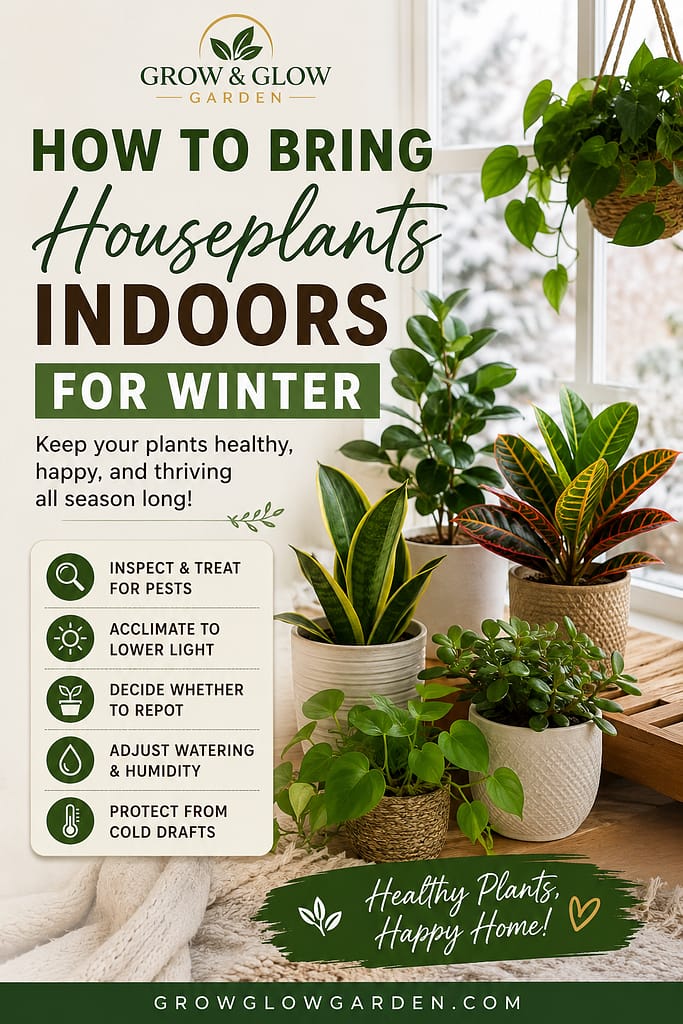
In this guide, you’ll learn how to bring houseplants indoors for winter, how to check for pests, how to acclimate plants to lower indoor light, when repotting makes sense, how to adjust watering, and what to do if your plants struggle after the move.
📋Want the complete printable version of this guide? Our Indoor Gardening and Houseplant Care Guide is a professionally designed 23-page PDF covering all 12 plants in detail plus essential care guides monthly care calendar and quick reference charts. Perfect for keeping near your plants for quick reference!
When Should You Bring Houseplants Indoors?
There isn’t one calendar date that works for every gardener.
The right time depends on your local weather, the plant species, and the temperature the plant can tolerate.
As a general rule, tropical and frost-sensitive plants should be brought indoors before temperatures become dangerously cold. Don’t wait until the first frost catches you by surprise.
Pay attention to nighttime temperatures because plants that tolerate warm daytime conditions may become stressed when nights become consistently cool.
Watch Your Local Conditions
Before moving plants indoors, check your local weather forecast and consider:
Nighttime temperatures
Expected cold snaps
Frost or freezing conditions
The plant’s temperature tolerance
How long the plant will remain indoors
Tropical plants generally need more protection from cold than many hardy outdoor plants.
If you’re unsure about a particular plant, research its specific temperature requirements before making the transition.
Which Outdoor Plants Can You Bring Indoors?
Many container-grown plants can be moved indoors for part of the year, particularly plants that naturally prefer warm conditions.
Common examples include:
Tropical foliage plants
Hibiscus
Begonias
Coleus
Ferns
Certain herbs
Citrus grown in containers
Some succulents
Tender flowering plants
Other frost-sensitive container plants
Not every outdoor plant needs to come indoors. Hardy plants that are suited to your local climate may be better left outdoors.
The goal is to protect plants that need warmer conditions while giving them an indoor environment they can realistically tolerate.
Step 1: Inspect Your Plants for Pests
One of the biggest mistakes gardeners make is bringing outdoor pests into the house.
A plant that looks healthy from several feet away can still have aphids, mealybugs, scale, spider mites, or other unwanted visitors hiding among its leaves and stems.
Before bringing any plant indoors, give it a careful inspection.
Where to Look for Pests
Check:
The undersides of leaves
New growth
Leaf joints
Stems
Around the pot rim
Drainage holes
The soil surface
Saucer or tray beneath the container
Look for signs such as:
Tiny insects
Webbing
Sticky residue
White cotton-like material
Brown or raised bumps on stems and leaves
Distorted new growth
Unexplained yellowing or leaf damage
Don’t rely on a quick glance.
Take your time and inspect the entire plant.
What If You Find Pests?
If you discover an infestation, don’t immediately place the plant beside your other houseplants.
Keep the affected plant separate and address the pest problem before introducing it to your indoor collection.
This simple step can prevent a small outdoor pest problem from becoming a much larger indoor problem.
📝Helpful tool: Yellow sticky traps can be useful for monitoring flying pests around newly relocated houseplants.
As an Amazon Associate, I earn from qualifying purchases
Step 2: Clean the Plant Before Bringing It Inside
Once you’ve inspected the plant, give it a thorough cleaning.
Remove dead leaves, damaged foliage, weeds, and other debris from the container.
Gently clean dusty leaves when appropriate, paying particular attention to the undersides.
The outside of the container should also be checked and cleaned because pests can hide around pot rims, drainage holes, and saucers.
Avoid using harsh cleaning products on plant foliage.
The goal is simply to remove dirt, debris, and potential hiding places while keeping the plant healthy.
Step 3: Quarantine Plants Before Joining Your Indoor Collection
Even after cleaning and inspecting a plant, quarantine is a smart precaution.
Place newly moved plants away from your established indoor plants for a period of observation.
A quarantine period of approximately one to two weeks can give you time to notice pests or other problems that weren’t obvious during the first inspection.
During this time:
Check leaves regularly
Watch for new pest activity
Monitor the soil
Look for unusual leaf damage
Keep the plant separated from other houseplants
Quarantine may feel unnecessary when a plant looks perfectly healthy, but prevention is much easier than trying to control pests after they spread throughout your indoor collection.
Step 4: Gradually Acclimate Plants to Lower Indoor Light
One of the biggest changes a plant experiences when moving indoors is light.
Outdoor light is often much stronger than the light available through a household window.
A plant that spent the summer receiving bright outdoor light may struggle if it is suddenly moved into a darker room.
Make the Transition Gradually
When possible, gradually reduce the plant’s exposure to intense outdoor light before moving it completely indoors.
For example, you can move a plant from full outdoor exposure to a brighter sheltered location first, then transition it to its indoor position.
This gives the plant time to adjust.
Choose the Right Indoor Location
Before bringing the plant inside, decide where it will live.
Consider:
Available natural light
Window direction
Temperature
Drafts
Heating or cooling vents
Humidity
Space between plants
A bright window may be appropriate for one plant but too intense or too cool for another.
Don’t assume every houseplant needs to sit directly against a window.
The right location depends on the plant’s light requirements.
💡A Grow lights are particularly useful when a home doesn’t provide enough natural light.
As an Amazon Associate, I earn from qualifying purchases.
Step 5: Decide Whether Your Plant Really Needs Repotting
Bringing a plant indoors doesn’t automatically mean it needs a new pot.
In fact, unnecessary repotting can create additional stress at a time when the plant is already adjusting to a major environmental change.
Instead, inspect the plant and its roots before deciding.
Signs a Plant May Need Repotting
Consider repotting if:
Roots are growing through the drainage holes
The plant is severely root-bound
The pot is clearly too small
The existing soil has deteriorated significantly
Drainage has become poor
The plant has another clear root or soil-related problem
If the plant is healthy and comfortable in its current container, there may be no reason to disturb the roots before bringing it indoors.
If You Do Repot
Choose a container with adequate drainage and avoid moving the plant into a dramatically oversized pot.
A pot that is much larger than the root system can hold excess moisture and increase the risk of root problems.
Whenever possible, make repotting a deliberate decision rather than an automatic part of the indoor transition.
Step 6: Choose the Right Indoor Location
Finding the right indoor location can make a major difference in how well your plant adapts.
Light
Place the plant where it receives the amount of light appropriate for its species.
Temperature
Avoid locations with extreme temperature changes.
Drafts
Keep plants away from cold drafts, frequently opened exterior doors, and other areas where temperatures fluctuate significantly.
Heating Vents
Avoid placing plants directly beside heating vents.
Hot, dry air blowing continuously onto foliage can create stressful conditions.
Humidity
Indoor air can become considerably drier when heating systems are running.
Some tropical plants may benefit from a more humid environment, although simply keeping the soil constantly wet is not a substitute for appropriate humidity.
Step 7: Adjust Your Watering Routine
One of the most common mistakes after bringing plants indoors is continuing the exact same watering schedule used outdoors.
Indoor conditions are different.
Lower light, less air movement, cooler temperatures, and slower growth can all affect how quickly soil dries.
Instead of watering according to a fixed schedule, check the plant and soil regularly.
Avoid Overwatering
Don’t water simply because the calendar says it’s time.
Check the soil moisture and consider the plant’s individual needs.
If the soil remains wet for a long time, watering too frequently can create conditions that encourage root problems.
At the same time, don’t allow plants that require consistently moist soil to become excessively dry.
The goal is to adjust your watering routine to the plant’s new indoor environment.
⭐Useful tool: Whether you are struggling with overwatering or underwatering the guesswork ends with a simple Soil Moisture Meter
As an Amazon Associate, I earn from qualifying purchases.
What Happens When Plants Drop Leaves After Coming Indoors?
Don’t panic if a plant loses a few leaves after being moved indoors.
The transition from outdoors to indoors can involve significant changes in:
Light
Temperature
Humidity
Air movement
Water use
Some plants respond to these changes with temporary leaf yellowing or leaf drop.
When Should You Be Concerned?
Pay closer attention if you notice:
Rapid or severe leaf loss
Persistent wilting
Widespread yellowing
Pest activity
Mushy stems
Soil that remains excessively wet
Significant decline over time
These symptoms may indicate a problem that goes beyond normal adjustment.
Check the plant’s light, watering, temperature, soil moisture, and pest status before assuming the plant simply needs more water or fertilizer.
Common Mistakes When Bringing Houseplants Indoors
Avoid these common mistakes during the transition.
- Bringing Plants Inside Without Checking for Pests
Outdoor pests can quickly become indoor pests.
- Skipping Quarantine
Even healthy-looking plants can carry pests that aren’t immediately visible.
- Moving Plants Directly From Bright Sun to Low Indoor Light
A sudden change in light can cause stress and weak growth.
- Overwatering
Indoor plants often use water more slowly than they did outdoors.
- Repotting Every Plant
Repot only when the plant actually needs it.
- Placing Plants Beside Heating Vents
Continuous hot, dry airflow can stress foliage.
- Crowding Plants Together Immediately
Give newly introduced plants enough space while you monitor them for pests.
- Ignoring Pests After the First Inspection
Continue checking plants during the first few weeks indoors.
- Forgetting About Humidity
Some tropical plants may struggle when indoor air becomes very dry.
- Assuming Every Plant Needs the Same Conditions
Different plants have different requirements for light, water, temperature, and humidity.
Houseplants That Often Need Extra Attention
Some plants require more careful preparation when transitioning indoors.
Tropical Plants
Tropical plants often need protection from cold temperatures and may require brighter indoor locations and higher humidity.
Succulents
Succulents generally require plenty of light and careful watering. Moving them indoors can mean significantly less light, so choose their location carefully.
Flowering Plants
Flowering plants may respond to changes in light and temperature by producing fewer flowers or dropping buds.
Herbs
Some herbs adapt well to indoor conditions when given enough light, while others may struggle if placed in a dark location.
Always consider the individual plant rather than relying solely on its category.
Need more information on indoor plants? Please to check out our guide on expert advice on indoor plant care and maintenance
A Simple Houseplant Indoor Transition Checklist
Use this checklist whenever you’re preparing your plants for the move indoors.
☐ Check nighttime temperatures and local weather
☐ Identify plants that need protection from cold
☐ Inspect leaves, stems, soil, and containers for pests
☐ Clean the plant and container
☐ Remove dead or damaged foliage
☐ Treat pest problems before bringing plants near your collection
☐ Quarantine newly moved plants
☐ Gradually reduce intense outdoor light
☐ Choose an appropriate indoor location
☐ Check roots and drainage
☐ Repot only when necessary
☐ Adjust watering for indoor conditions
☐ Monitor plants for pests and stress
☐ Continue checking plants during the first few weeks indoors
Frequently Asked Questions
How do I bring outdoor plants indoors without bugs?
Inspect the entire plant carefully before bringing it inside. Check leaves, stems, soil, pot rims, and drainage holes for pests or signs of infestation. Clean the plant and container, address any pest problems, and consider quarantining the plant before placing it near other houseplants.
When should I bring tropical plants indoors?
Bring tropical plants indoors before temperatures become too cold for their specific needs. Instead of relying on a single calendar date, monitor nighttime temperatures and your local weather conditions.
Should I repot plants before bringing them indoors?
Not necessarily. Repot only when there is a clear reason, such as severe root crowding, roots growing from drainage holes, poor drainage, or deteriorated soil. Unnecessary repotting can add stress during the transition.
How do I acclimate outdoor plants to indoor light?
Gradually reduce exposure to intense outdoor light before moving plants completely indoors. Then place each plant in an indoor location that provides the amount of light appropriate for its species.
Why are my houseplant leaves turning yellow after bringing them inside?
Changes in light, watering, temperature, humidity, and air movement can contribute to yellowing leaves during the transition. Check soil moisture, light levels, pests, and the plant’s overall condition before changing your care routine.
How long should I quarantine plants before bringing them near other houseplants?
A quarantine period of around one to two weeks is a useful precaution. Continue inspecting the plant during that period for pests or other problems before introducing it to your established indoor collection.
Final Thoughts
Bringing houseplants indoors for winter is more than moving a pot from one location to another.
It is a gradual transition that gives plants time to adjust to different light, temperature, humidity, watering, and growing conditions.
The most important steps are simple: inspect for pests, clean your plants, quarantine them, acclimate them to lower light, repot only when necessary, choose the right indoor location, and adjust your watering routine.
Taking these steps before the weather becomes too cold can help reduce stress and protect both your plants and your existing indoor collection.
With a little preparation and regular observation, your favorite tropical and tender plants can make the move indoors successfully and be ready to thrive again when the growing
Did this guide help you to understand properly how to bring houseplants indoors for the winter? Leave a comment below — I read and respond to every single one and would love to hear which varieties you are planning to save seeds from this season. Thank you for reading and happy growing! 🌱