March is one of the most exciting months for gardeners. As temperatures begin to rise and daylight hours increase, many vegetables and herbs can be planted to kick-start a productive growing season.
Whether you’re growing in raised beds, containers, or a backyard garden, knowing what to plant in March can help you enjoy an earlier harvest and healthier plants throughout the season.
Here’s a simple guide to the best vegetables, herbs, and gardening tasks to focus on in March.
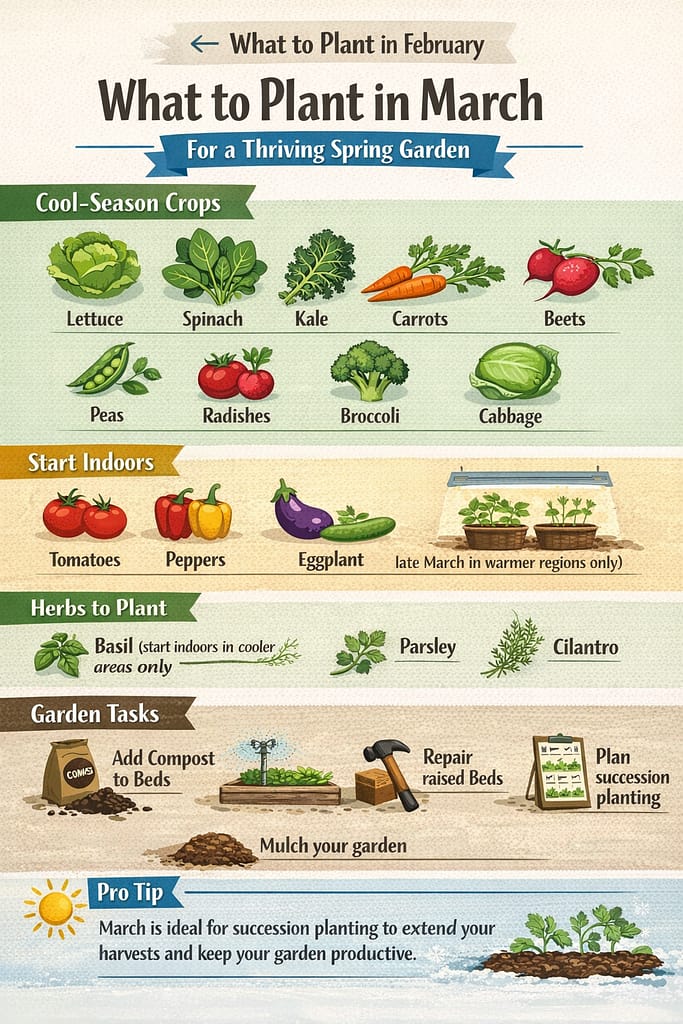
Vegetables to Plant in March
March is perfect for cool season crops that grow well in mild temperatures.
If you are new in gardening or confuse what to plant: check out our article on: Raised Bed Gardening for Beginners What I Wish I Know Before Planting
Great vegetables to plant include:
- Lettuce
- Spinach
- Carrots
- Radishes
- Beets
- Peas
- Swiss chard
- Kale
These vegetables grow quickly and tolerate the cooler temperatures of early spring.
Tip: Plant small batches every 1–2 weeks. This technique, called succession planting, helps you harvest fresh vegetables for a longer period.
Herbs You Can Start in March
Many herbs grow beautifully when started early in spring.
Please to check out our full guide on: Early Spring Garden Prep Checklist for a Thriving Growing Season
Good choices include:
- Parsley
- Cilantro
- Dill
- Chives
- Basil (start indoors if nights are still cool)
Fresh herbs are perfect for container gardens and raised beds, making them ideal for small spaces.
Start Warm-Season Crops Indoors
While some plants grow best outdoors in March, others should be started indoors first.
You can begin seedlings for:
- Tomatoes
- Peppers
- Eggplant
Starting these plants indoors gives them a strong head start before they are transplanted outside later in the season.
Important Garden Tasks for March
March is also the perfect time to prepare your garden beds for the months ahead.
Focus on these simple tasks:
✔ Add compost to improve soil fertility
✔ Remove weeds from planting areas
✔ Check irrigation systems or watering routines
✔ Mulch garden beds to retain moisture
✔ Plan your planting layout for spring
Healthy soil and proper preparation make a huge difference in plant growth.
Gardening Tip: Try Succession Planting
Succession planting simply means planting the same crop at different times.
For example:
- Plant lettuce this week
- Plant another batch two weeks later
This keeps your garden producing fresh food continuously instead of everything harvesting at once.
Learn how to keep your raised bed producing fresh vegetables and all seasons check out our full article: Succession Planting in Raised Beds: How to Maximize Harvest
Final Thoughts
March is the perfect month to start building momentum in your garden. By planting cool-season vegetables, starting warm-season crops indoors, and preparing your soil, you’ll set yourself up for a productive and rewarding growing season.
With just a little planning now, your garden will be thriving in the months ahead.
Frequently Asked Questions
What can I plant in early March?
Cool-season crops like lettuce, spinach, peas, and carrots grow well in early March temperatures.
Is March too early for tomatoes?
In cooler regions, start tomatoes indoors. In warmer climates, late March may be suitable for transplanting.
Should I fertilize in March?
Adding compost or organic fertilizer in March helps support early plant growth.
Thanks once again for checking out my article, if you enjoy reading these articles please to share, like, and leave your comments below