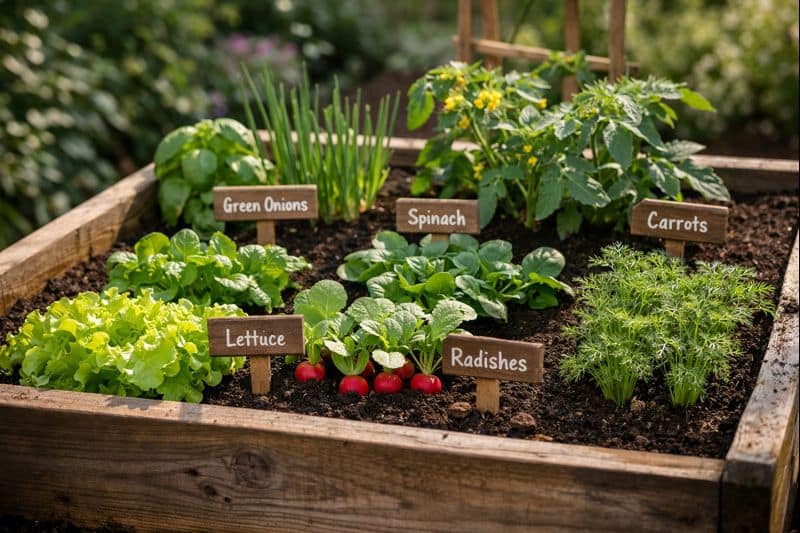
Starting a raised bed garden is exciting—but for many beginners, the biggest question isn’t how to garden… it’s what to plant first.
If you’ve ever stood over a freshly filled raised bed wondering where to start, you’re not alone. The good news? There is a simple planting order that makes gardening easier, reduces mistakes, and sets you up for a healthier, more productive garden from the very beginning.
Let’s break it down step by step.
Why Planting Order Matters in Raised Beds
Raised beds give you better soil control, drainage, and accessibility—but space is limited. What you plant first affects:
- how much room your plants have to grow
- how sunlight is shared
- how nutrients are used
- how easy it is to manage pests and watering
Planting in the right order helps you avoid overcrowding, shading problems, and wasted space—three of the most common beginner mistakes.
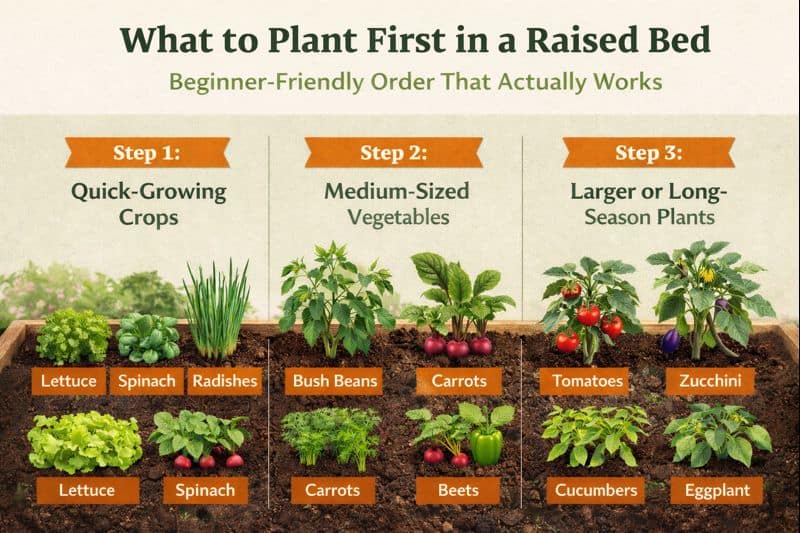
Step 1: Start with Quick-Growing Crops
The best plants to start with are fast growers that mature quickly and don’t take up much space.
Great first-plant options:
- Lettuce
- Spinach
- Arugula
- Radishes
- Green onions
Why these go first:
They grow fast, tolerate cooler temperatures, and are often harvested before larger plants need the space. This gives you an early win—and frees up room later.
Step 2: Add Medium-Sized, Reliable Plants
Once your quick crops are established (or even being harvested), it’s time to plant medium-sized vegetables that form the backbone of your raised bed.
Good choices include:
- Bush beans
- Carrots
- Beets
- Peppers
- Kale
These plants need a bit more space but won’t overwhelm your bed. They also benefit from the soil being lightly “warmed up” by earlier plantings.
If you’re brand new to raised bed gardening, you may also find this beginner guide helpful: Raised Bed Gardening for Beginners: What I Knew Before Planting
Step 3: Plant Larger or Long-Season Crops Last
Now that your raised bed is active and growing, it’s time for the bigger plants.
Examples:
- Tomatoes
- Zucchini
- Cucumbers
- Eggplant
Important tip:
Place taller plants toward the back or north side of the bed so they don’t shade smaller crops. This simple positioning makes a huge difference.
Step 4: Use Herbs as Fillers and Companions
Herbs are one of the smartest additions to a raised bed—and they can be planted throughout the season.
Beginner-friendly herbs:
- Basil
- Parsley
- Thyme
- Cilantro
Herbs:
- help repel pests
- attract pollinators
- fill small gaps without crowding
Think of them as helpers that make your garden work better.
Step 5: Leave Room for Succession Planting
One of the biggest advantages of raised beds is the ability to replant throughout the season.
As quick crops finish, you can:
- replace lettuce with beans
- follow radishes with carrots
- plant herbs where greens were harvested
Planning for this from the start keeps your bed productive instead of empty.
Common Beginner Mistakes to Avoid
Before you plant everything at once, keep these in mind:
- ❌ planting all crops at the same time
- ❌ ignoring plant height and spacing
- ❌ overcrowding “just in case”
- ❌ forgetting that some plants finish earlier than others
Raised beds reward patience and planning far more than rushing.
Once you’ve decided what to plant first, proper spacing is just as important. Learn how to avoid overcrowding in this guide:
How to Space Plants in Raised Beds (Avoid These Common Beginner Mistakes)
Final Thoughts: Start Simple, Grow Confident
You don’t need to plant everything at once to have a successful raised bed. In fact, starting small and planting in stages is one of the best ways to learn and enjoy the process.
Begin with quick growers, build up gradually, and let your garden guide you as the season unfolds.
Every harvest—no matter how small—is progress.
Ready to Keep Growing?
If you enjoyed this guide, explore more beginner-friendly raised bed tips here on Grow & Glow Garden, and feel free to share your experience or questions in the comments. Gardening is better when we grow together