When I first started gardening, I thought success came from having the right tools or planting the right vegetables. What I didn’t realize was that most beginner mistakes have nothing to do with effort — they come from not knowing a few simple truths early on.
If you’re just getting started with raised bed gardening, this article is everything I wish someone had told me before I planted my first bed.
If you’re still deciding what to grow, this guide will help you get started with the right planting order: What to Plant First in a Raised Bed
1. Bigger Isn’t Always Better
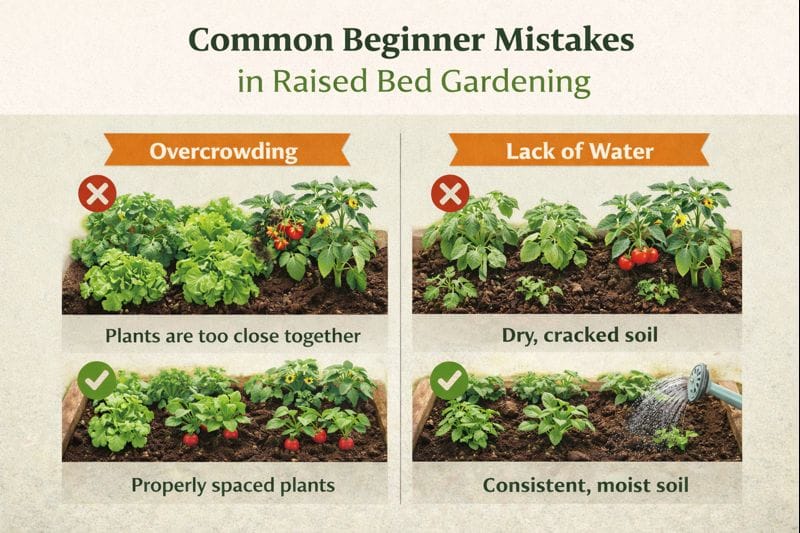
One of the first mistakes beginners make is trying to grow too much at once.
It’s tempting to fill every inch of your raised bed with plants, but overcrowding leads to:
- poor airflow
- more pests and disease
- smaller harvests
What I wish I knew:
It’s better to grow fewer plants well than many plants poorly. Healthy spacing always wins.
2. Soil Quality Matters More Than Anything Else
I used to think soil was just dirt. It isn’t.
Raised beds succeed or fail based on what’s under the surface.
Good raised bed soil should be:
- loose and well-draining
- rich in organic matter
- alive with beneficial microbes
Lesson learned:
Investing in good soil early saves you frustration all season long.
3. Sunlight Can Make or Break Your Garden
Not all garden problems are soil-related. Some are simply about sun exposure.
Most vegetables need:
- 6–8 hours of direct sunlight per day
I learned the hard way that planting sun-loving crops in partial shade leads to:
- slow growth
- weak plants
- low yields
Tip:
Observe your space before planting — sunlight patterns matter more than location.
4. Raised Beds Still Need a Plan
I once planted without a plan, thinking I’d “figure it out as I go.” That led to:
- tall plants shading smaller ones
- vines taking over walkways
- constant rearranging
What works better:
- plant taller crops at the back or north side
- group plants with similar needs
- leave room to access your bed easily
A simple plan prevents constant fixes later.
One of the biggest lessons I learned was how important spacing really is. This guide explains how to get it right:
How to Space Plants in Raised Beds
5. Watering Is About Consistency, Not Quantity
Overwatering and underwatering are both common beginner mistakes.
What I wish I knew:
- raised beds dry out faster than ground soil
- shallow watering encourages weak roots
- consistent moisture is better than heavy soaking
Simple rule:
Water deeply, less often, and check the soil before watering again.
6. You Don’t Need to Be Perfect to Be Successful
This might be the most important lesson of all.
Plants don’t need perfection — they need care, patience, and observation.
You’ll make mistakes. Every gardener does.
Some plants won’t thrive. That’s normal.
Each season teaches you something new.
Gardening isn’t about getting it right the first time — it’s about learning as you grow.
Final Thoughts
If you’re new to raised bed gardening, know this:
You’re already doing something amazing by starting.
Take it slow. Learn from each season. Celebrate small wins.
And remember — every experienced gardener was once a beginner too.
Keep Growing with Confidence
If this article helped you feel more confident about raised bed gardening, explore more beginner-friendly guides here on Grow & Glow Garden and share your thoughts in the comments. Your journey might inspire someone else to start