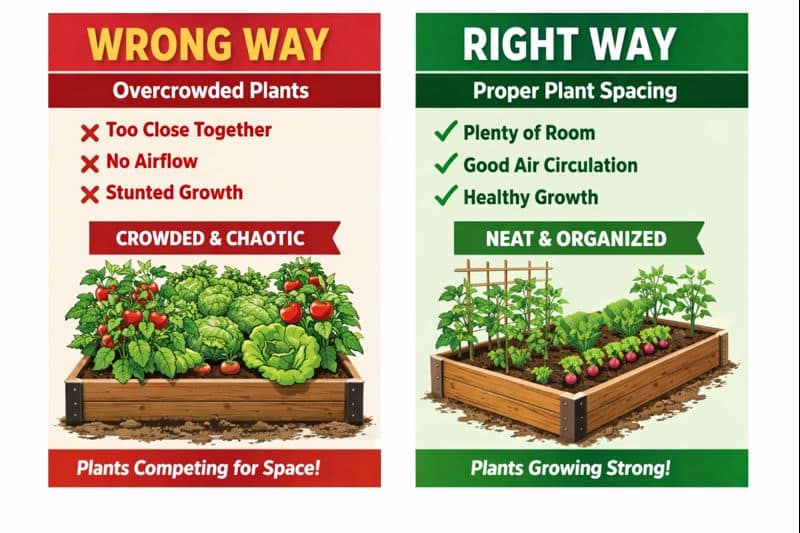
Plant spacing might seem like a small detail, but in raised bed gardening, it can be the difference between thriving plants and disappointing harvests.
Many beginners assume that planting crops closer together will lead to more food. In reality, proper spacing helps plants grow healthier, stronger, and more productive.
Let’s break down exactly how to space plants in raised beds—and the mistakes to avoid.
Why Plant Spacing Matters More in Raised Beds
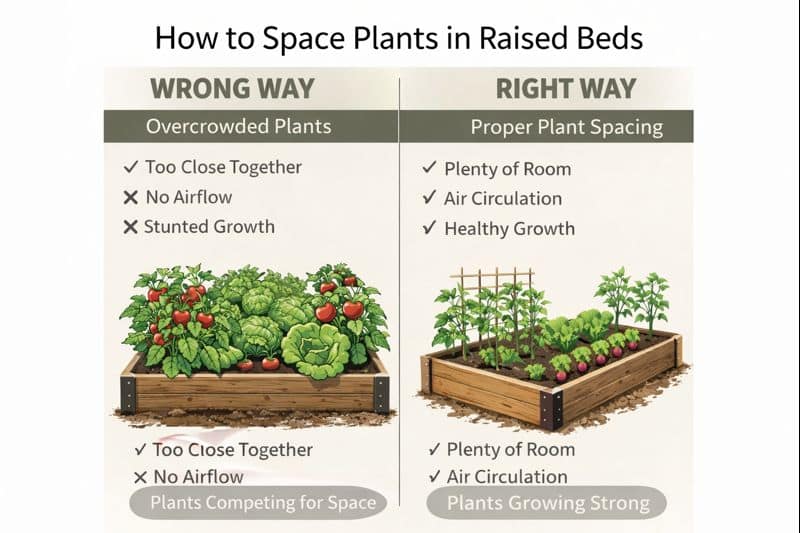
Raised beds offer rich soil and good drainage, which encourages fast growth. But because space is limited, overcrowding can quickly cause problems such as:
- poor airflow
- increased pests and disease
- competition for nutrients and water
- smaller or weaker plants
Spacing correctly allows each plant to reach its full potential.
If you’re still in the planning stage, it helps to understand what to plant first before spacing anything out: What to Plant First in a Raised Bed
Mistake #1: Planting Too Close “Just in Case”
One of the most common beginner mistakes is planting extra seedlings close together, hoping at least some will survive.
What actually happens:
- roots compete underground
- leaves overlap and block sunlight
- plants struggle instead of thriving
Better approach:
Follow recommended spacing and trust that healthy plants produce better yields than crowded ones.
Mistake #2: Ignoring Mature Plant Size
Seedlings look small, but they don’t stay that way.
For example:
- tomatoes grow wide and tall
- zucchini spreads rapidly
- peppers need airflow
Tip:
Always space plants based on their full-grown size, not how they look at planting time.
Mistake #3: Forgetting About Airflow
Good airflow helps prevent fungal diseases and pests.
When plants are too close:
- moisture gets trapped
- leaves stay wet longer
- disease spreads more easily
Spacing plants properly improves air circulation and keeps foliage dry and healthy.
Beginner-Friendly Spacing Guidelines
Here’s a simple reference to get you started:
- Lettuce: 6–8 inches apart
- Carrots: 2–3 inches apart
- Peppers: 12–18 inches apart
- Tomatoes: 18–24 inches apart
- Cucumbers (trellised): 12 inches apart
- Zucchini: 24–36 inches apart
Always check seed packets for specific recommendations, especially for different varieties.
Use Vertical Space to Save Room
One of the best ways to avoid overcrowding is to grow up instead of out.
Great candidates for vertical growing:
- tomatoes
- cucumbers
- pole beans
- peas
Using trellises or stakes allows you to:
- space plants comfortably
- improve airflow
- harvest more easily
Thin Seedlings Early (Yes, Really)
It’s hard to remove healthy seedlings, but thinning is essential.
If you don’t thin:
- plants compete from the start
- growth is stunted
- harvest size suffers
Tip:
Snip extra seedlings at soil level instead of pulling them out to avoid disturbing roots.
Final Thoughts: Space Is an Investment, Not a Waste
Leaving space between plants may feel like wasted room, but it’s actually an investment in healthier growth and better harvests.
In raised bed gardening, less crowding leads to more success.
Give your plants room to grow, and they’ll reward you for it.
New to raised bed gardening? This beginner-friendly guide shares lesson that can save your time and frustration: Raised Bed Gardening for Beginners: What I Wish I Knew Before Planting
Grow Smarter, Not Harder
If this guide helped you understand plant spacing better, explore more raised bed tips here on Grow & Glow Garden, and share your experience in the comments. Your insight might help another gardener avoid the same mistakes