
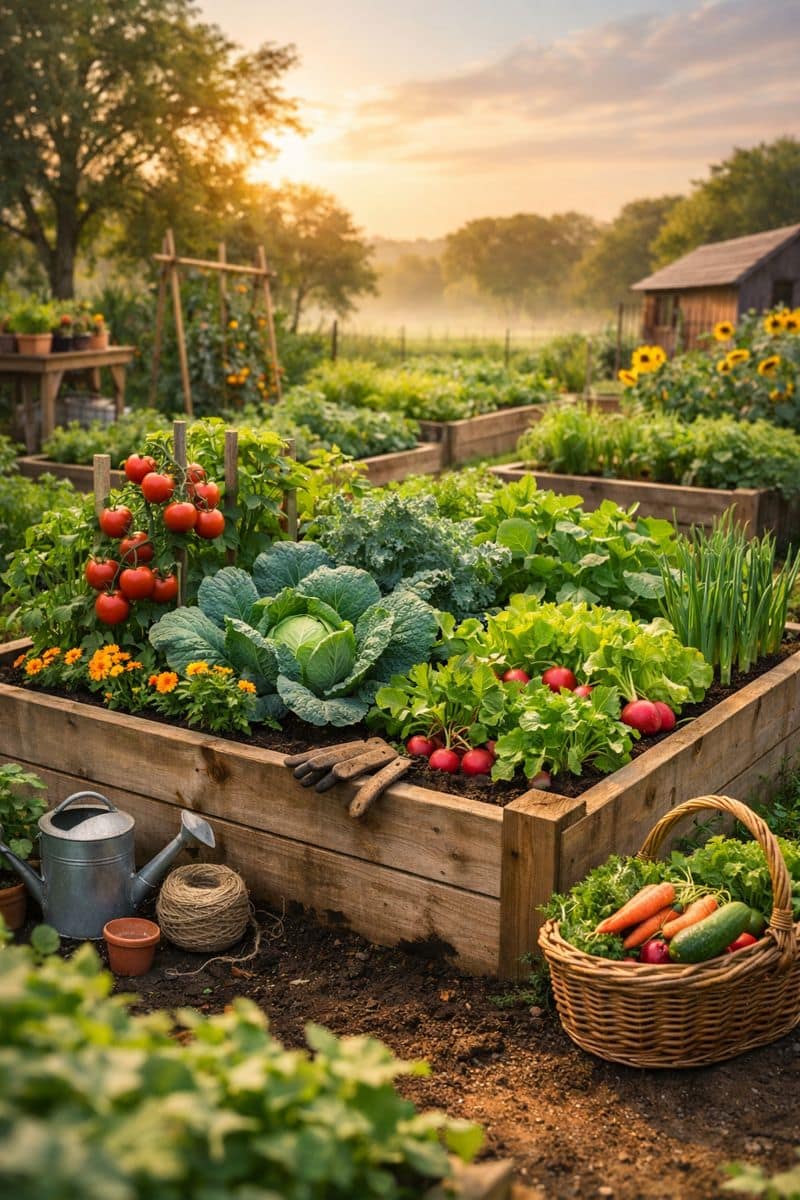
As one growing season winds down, the next one quietly begins. Preparing your raised beds ahead of time is one of the most powerful ways to ensure healthier plants, better soil, and bigger harvests next season.
Whether you garden year-round or seasonally, these simple steps will help your raised beds stay productive and ready for planting.
Affiliate Disclosure:
This post contains affiliate links. When you purchase through these links, I may earn a small commission that helps support Grow & Glow Garden at no extra cost to you. I only share products I genuinely recommend
1. Clear Out Old Plants & Debris
Start with a clean slate.
What to remove:
- Spent vegetable plants
- Diseased foliage
- Weeds and roots
Why it matters:
Old plant material can harbor pests and diseases that carry over into the next season.
Tip:
Healthy plant matter can go into compost — diseased plants should be discarded.
2. Refresh the Soil
Raised bed soil settles and loses nutrients over time.
How to refresh:
- Add compost or aged manure
- Mix in organic matter
- Top up beds that have sunk
Why it matters:
Healthy soil equals stronger roots and higher yields.
Starting with quality seeds makes all the difference. I recommend browsing SeedsNow vegetable seeds collection for a wide selection of non-GMO, open-pollinated varieties that perform beautifully in raised beds. They offer everything from compact varieties perfect for small spaces to high-yielding options for larger beds.
3. Plan Crop Rotation
Avoid planting the same crops in the same spots each season.
Rotate to:
- Reduce soil-borne diseases
- Prevent nutrient depletion
- Improve long-term soil health
Example:
If tomatoes grew in one section this season, plant leafy greens or beans there next time.

4. Add Mulch or Cover Crops
Protect your soil during downtime.
Mulch options:
- Straw
- Leaves
- Wood chips
Cover crop options:
- Clover
- Rye
- Peas
Why it matters:
Mulch prevents erosion, while cover crops improve soil structure and fertility.
5. Inspect and Repair Raised Beds
Now is the perfect time to fix small issues.
Check for:
- Loose boards
- Rotting wood
- Leaning frames
Tip:
Early repairs prevent bigger problems later.
6. Plan Ahead for Next Season
A little planning now saves time later.
Do this now:
- Sketch bed layouts
- Order seeds early
- Note what worked (and what didn’t)
- If you’re specifically looking for space-efficient options, check out their raised bed-friendly varieties-these are bred or selected specifically for compact growth habits, making them ideal for maximized production in limited space.
Final Thoughts
Preparing your raised beds before the next growing season is one of the smartest habits a gardener can develop. A few intentional steps now lead to healthier plants, fewer problems, and more rewarding harvests later.
Your garden’s success starts long before planting day. Happy gardening!