Melon farming is becoming increasingly popular among farmers and home gardeners in Jamaica. With the right growing practices, melons can be a profitable and rewarding crop.
However, many growers struggle with common problems such as yellowing leaves, pest infestations, poor fruit development, and heavy dependence on synthetic chemicals. These issues often lead to unhealthy plants and reduced yields.
The good news is that melons can thrive with healthier soil practices, natural pest control methods, and proper plant care. In this guide, you’ll learn practical steps to grow strong, productive melon plants while reducing the need for harsh chemicals.
Choosing the Right Location
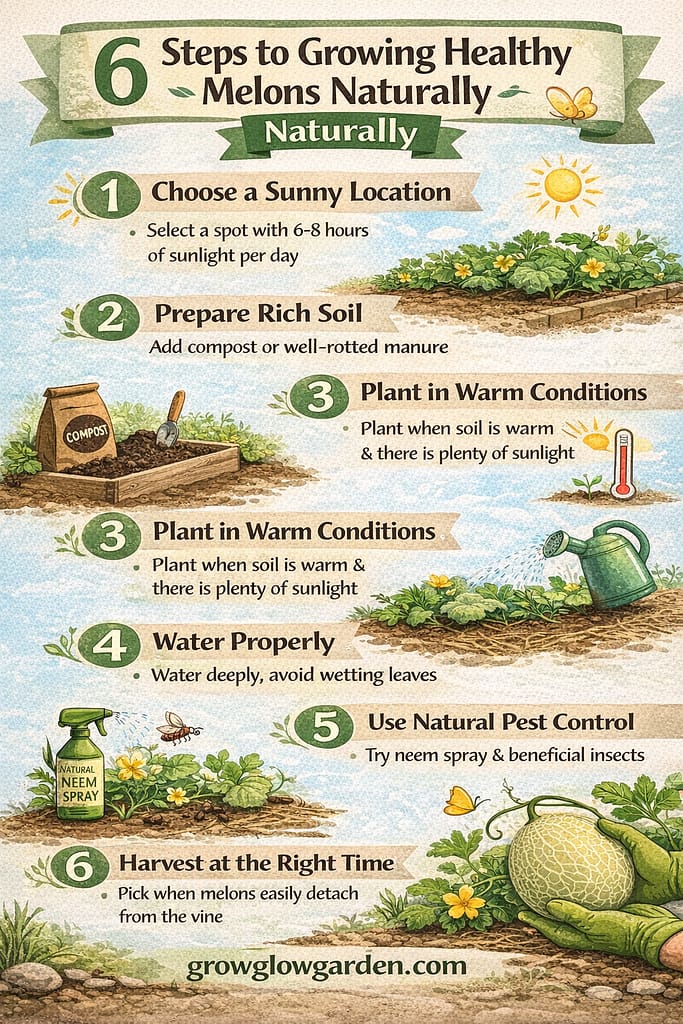
Melons love sunlight and warm temperatures.
For best results:
- Choose a location that receives 6–8 hours of sunlight daily
- Use well-drained soil
- Avoid areas where water collects after rain
Melons grow best in loose, fertile soil rich in organic matter.
Tip: Raised beds or mounds help improve drainage and root development.
Preparing the Soil for Healthy Growth
Healthy soil is the foundation of a successful melon crop.
Before planting:
✔ Add compost or well-rotted manure
✔ Mix in organic matter to improve soil structure
✔ Ensure the soil is loose and well aerated
Organic soil amendments help plants stay green and strong without relying on synthetic fertilizers.
Good soil also helps prevent leaf burn and nutrient stress, which many farmers experience.
Best Time to Plant Melons
Melons grow best in warm conditions.
Plant when:
- Soil temperature is warm
- There is plenty of sunlight
- Heavy rains are not constant
Seeds can be planted directly into the soil or started in small nursery containers before transplanting.
Watering the Right Way
Many melon problems happen because of improper watering.
Follow these tips:
- Water deeply but less frequently
- Water early in the morning
- Avoid wetting the leaves too much
Consistent watering encourages strong root development and reduces plant stress.
Mulching around plants helps retain moisture and regulate soil temperature.
Natural Pest Control Methods
Pests are one of the biggest challenges in melon farming.
Instead of relying only on chemicals, try natural methods:
✔ Introduce beneficial insects
✔ Use neem-based sprays
✔ Remove heavily infested leaves
✔ Keep weeds under control
Healthy plants are naturally more resistant to pests.
Regular field inspection helps you catch problems early before they spread.
How to Keep Melon Leaves Green and Healthy
Many farmers struggle with yellow or burned leaves.
Common causes include:
- Poor soil nutrition
- Excess chemical fertilizer
- Water stress
- Pest damage
To maintain lush green plants:
- Apply compost regularly
- Use organic fertilizers such as fish emulsion or compost tea
- Maintain consistent watering
- Ensure proper plant spacing
Healthy soil leads to healthier plants.
Supporting Fruit Development
Once vines begin to spread, melon plants will start flowering.
To encourage good fruit development:
- Ensure plants receive full sunlight
- Avoid excessive nitrogen fertilizer
- Maintain proper spacing for airflow
Pollination is also very important. Bees and other pollinators help melon flowers produce fruit.
Planting flowering herbs nearby can attract pollinators naturally.
Harvesting Melons at the Right Time
Knowing when to harvest makes a big difference in flavor and quality.
Signs a melon is ready to harvest:
- Sweet fragrance from the fruit
- Skin color changes slightly
- The fruit easily separates from the vine
Harvesting at the right stage ensures the best taste and quality.
Final Thoughts
Melon farming can be successful and profitable when growers focus on soil health, proper watering, and natural pest management.
Instead of depending heavily on synthetic chemicals, improving soil fertility and using sustainable gardening practices can produce strong plants, greener leaves, and better fruit quality.
With the right approach, farmers and gardeners can grow healthy melons while protecting both their crops and the environment.
Thanks once again for checking out my article, if you enjoy reading these articles please to share, like, and leave your comments below.