
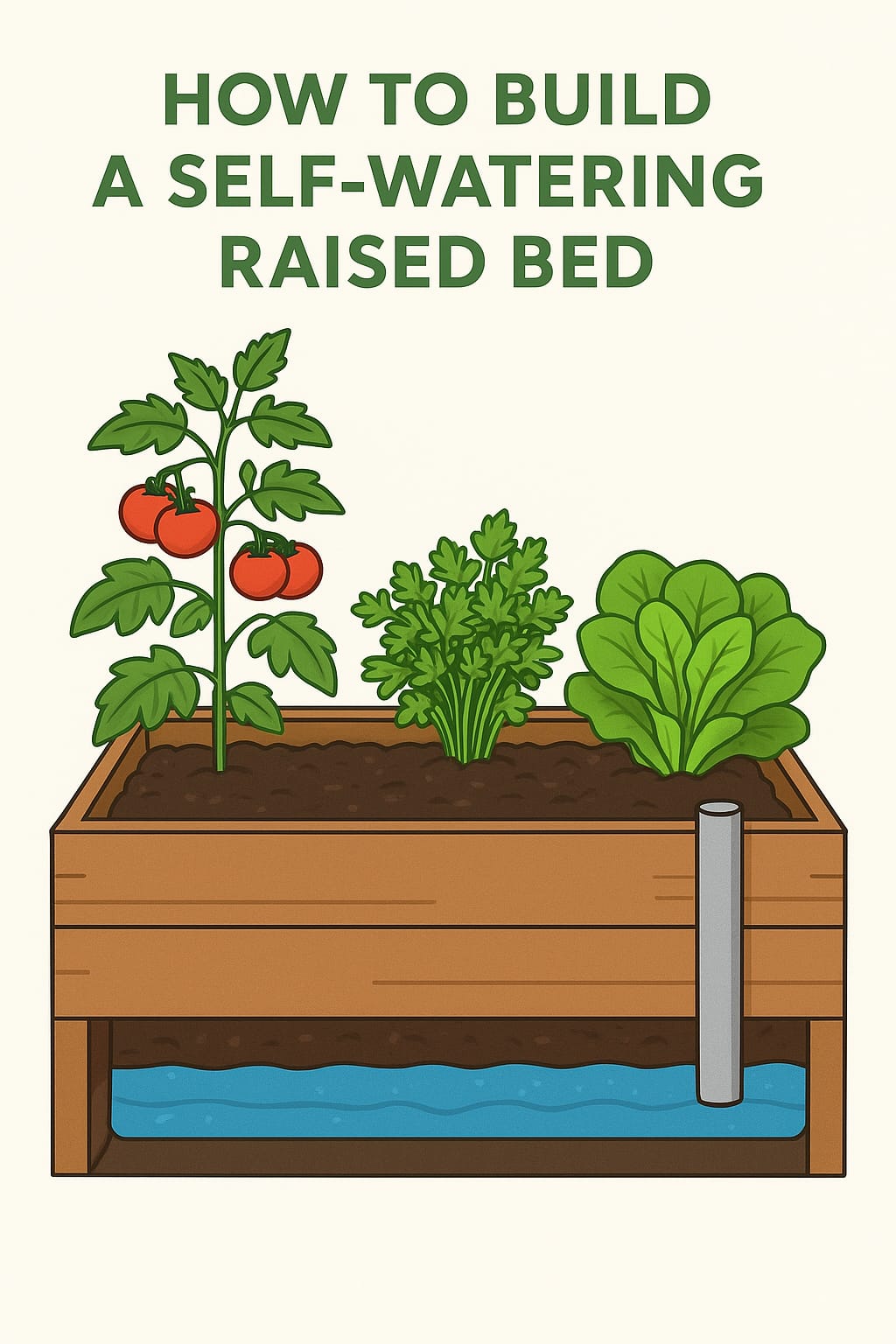
If you live in a hot climate, get busy during the week, or simply want a raised bed that practically waters itself — a self-watering raised bed is one of the best upgrades you can make to your garden. It delivers consistent moisture right to the roots, prevents overwatering, reduces water waste, and helps plants grow stronger with less effort from you.
The great news?
You can build one yourself using simple materials — even on a budget.
Let’s break it down step-by-step.
What Is a Self-Watering Raised Bed?
A self-watering raised bed (also called a sub-irrigated raised bed) uses a reservoir system at the bottom to hold water. Plant roots draw up moisture as needed, meaning:
✔ Less daily watering
✔ Less stress on plants
✔ Consistent moisture
✔ Healthier vegetable growth
✔ Perfect for dry or windy locations
✔ Ideal for busy gardeners
It’s one of the most efficient ways to garden — especially in urban spaces.
Materials You’ll Need
You can adjust these based on the size of your raised bed, but here’s a general list:
- A raised bed (wood, metal, or prefab)
- Heavy-duty plastic liner or pond liner
- PVC pipes (1–1.5 inches)
- Perforated drainage pipe or plastic storage crates
- Landscape fabric
- Potting soil / raised bed mix
- Optional: mulch to retain even more moisture
Step-by-Step:
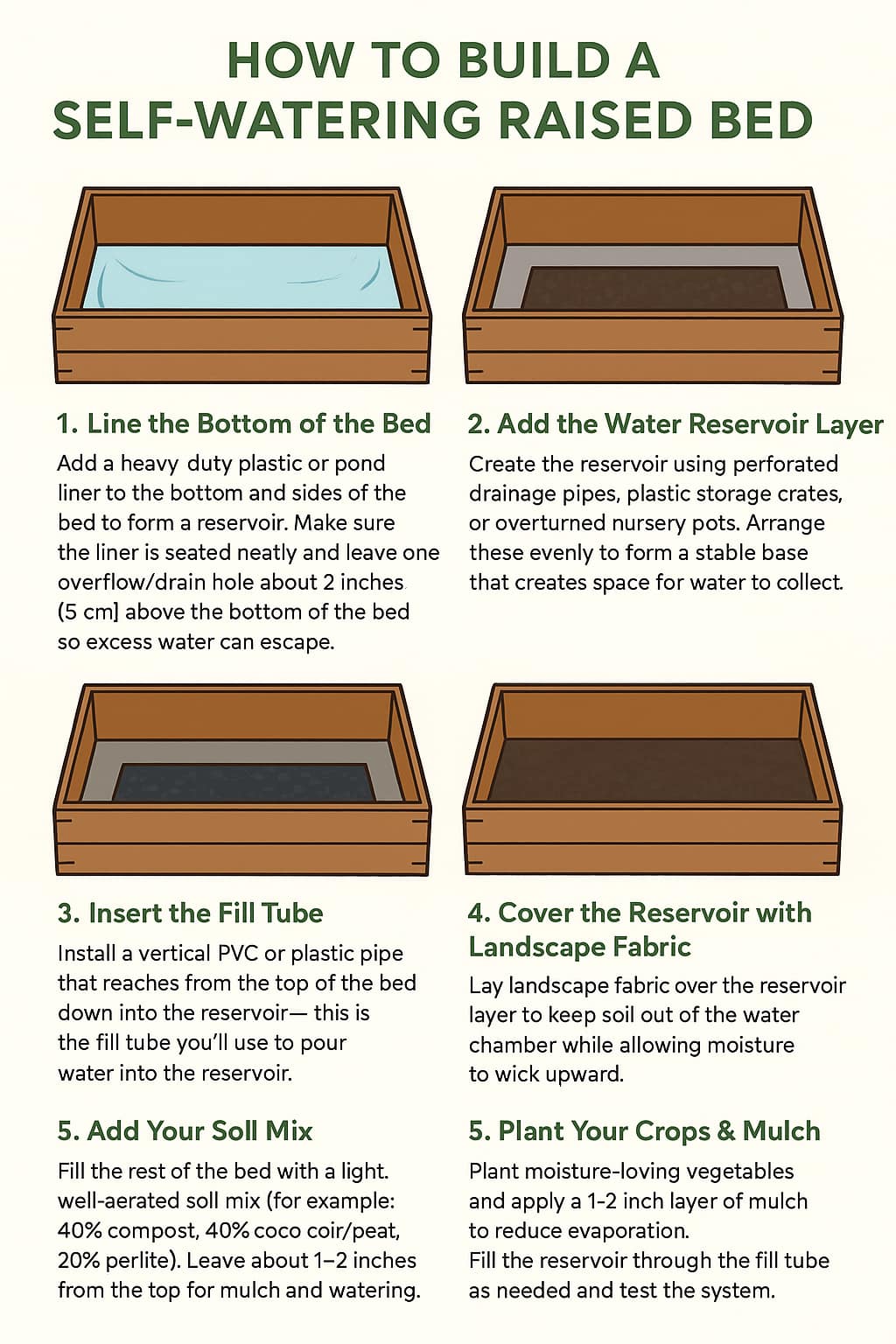
1. Line the Bottom of the Bed
Add a plastic liner to prevent water from escaping too quickly. This helps create the reservoir.
Make sure to punch one drainage hole about 2 inches from the top of where the reservoir will sit.
This prevents overflow.
2. Add the Water Reservoir Layer
Use one of these options:
- Perforated drainage pipes
- Plastic crates
- Upside-down nursery pots
- DIY “air chamber” made from PVC frames
The goal: Create a space for water to sit.
Spread the crates or pipes evenly to form a stable base.
3. Insert the Fill Tube
Cut a PVC pipe so it reaches from the top of the raised bed down into the reservoir.
This is where you will pour water.
Angle it slightly so the opening above the soil is comfortable to use.
4. Cover the Reservoir With Landscape Fabric
This prevents soil from falling into the water chamber while still allowing moisture to wick upward.
Secure it neatly around the edges.
5. Add Your Soil Mix
Fill the rest of the raised bed with a light, fluffy mix such as:
- 40% compost
- 40% peat/coir
- 20% perlite
Self-watering beds need well-aerated soil to move moisture upward effectively.
6. Plant Your Crops
Vegetables that love consistent moisture do extremely well in this system:
- Tomatoes
- Peppers
- Lettuce
- Cucumbers
- Herbs
- Beans
Mulch on top for even better performance!
How to Maintain Your Self-Watering Raised Bed
- Fill the reservoir through the PVC pipe every 3–7 days (depending on weather).
- Check periodically for clogs in the fill tube.
- Top up mulch monthly to reduce evaporation.
- Before hurricane or rainy season, ensure the drain hole is open.
This system lasts for years with minimal updates.
Why This Method Works So Well
Self-watering beds mimic nature:
Moisture rises from below, encouraging deep, strong root systems.
That means:
✔ Less leaf wilt
✔ Fewer watering mistakes
✔ Bigger harvests
✔ Healthier soil biology
Urban gardeners in hot climates (like Jamaica!) especially benefit from this setup.
Final Thoughts
A self-watering raised bed is one of the smartest upgrades you can make — especially if you want high yields with low maintenance. With just a few materials and a bit of setup time, you’ll have a raised bed that practically runs itself. Great for busy people, Reduced Disease.
This Self-watering raised bed especially popular for balconies, patio, and areas where consistent watering is challenging!
If you try this build, share a photo — I’d love to see how yours turns out, and don’t forget to leave a comment below!
This self -watering raised bed guide the step-by-step layout made everything easy to follow. now you will realize how much water you were wasting before you will be excited to try this method.