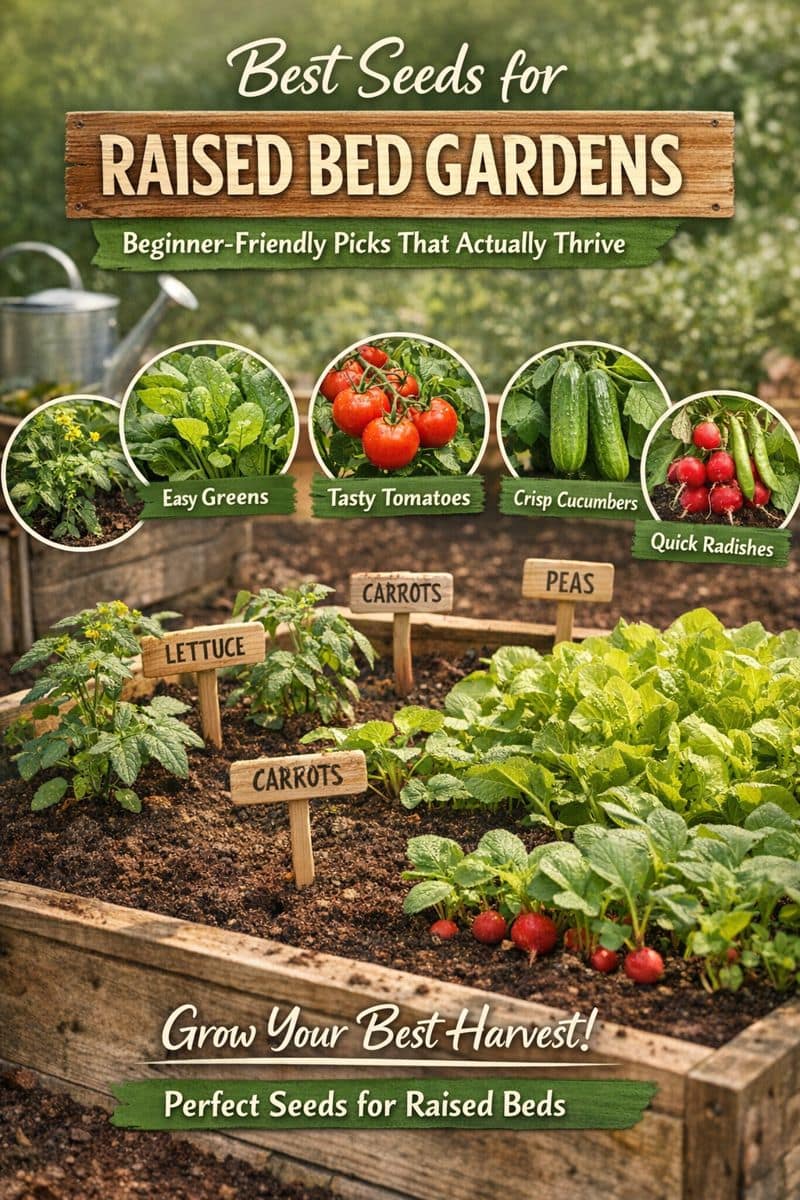
Starting a raised bed garden is one of the most rewarding ways to grow your own food — but success begins with one critical choice: the right seeds.
Not all seeds perform the same in raised beds. Some thrive in loose soil and confined spaces, while others struggle. In this guide, I’ll share beginner-friendly, reliable seed choices that grow well in raised beds, plus tips to help you get the best results from day one.
Whether you’re planting your very first bed or refining what already works, this list will save you time, effort, and frustration.
Affiliate Disclosure
This post may contain affiliate links, which means I may earn a small commission at no extra cost to you. I only recommend products I truly believe are helpful for beginner gardeners.
Why Seed Choice Matters in Raised Bed Gardening
Raised beds offer excellent drainage, warmer soil, and better control — but they also come with limited space. Choosing seeds that are:
- Compact
- Fast-growing
- High-yield
- Well-suited for containers
makes all the difference.
High-quality seeds also mean:
- Better germination rates
- Stronger seedlings
- Healthier plants overall
This is why starting with trusted seed varieties is so important.
What to Look for When Buying Seeds for Raised Beds
Before we dive into specific crops, here are a few things to keep in mind when choosing seeds:
- Compact or bush varieties (instead of sprawling types)
- Shorter maturity times
- Disease-resistant strains
- Seeds labeled as container-friendly or raised bed suitable
Now let’s get into the best options.
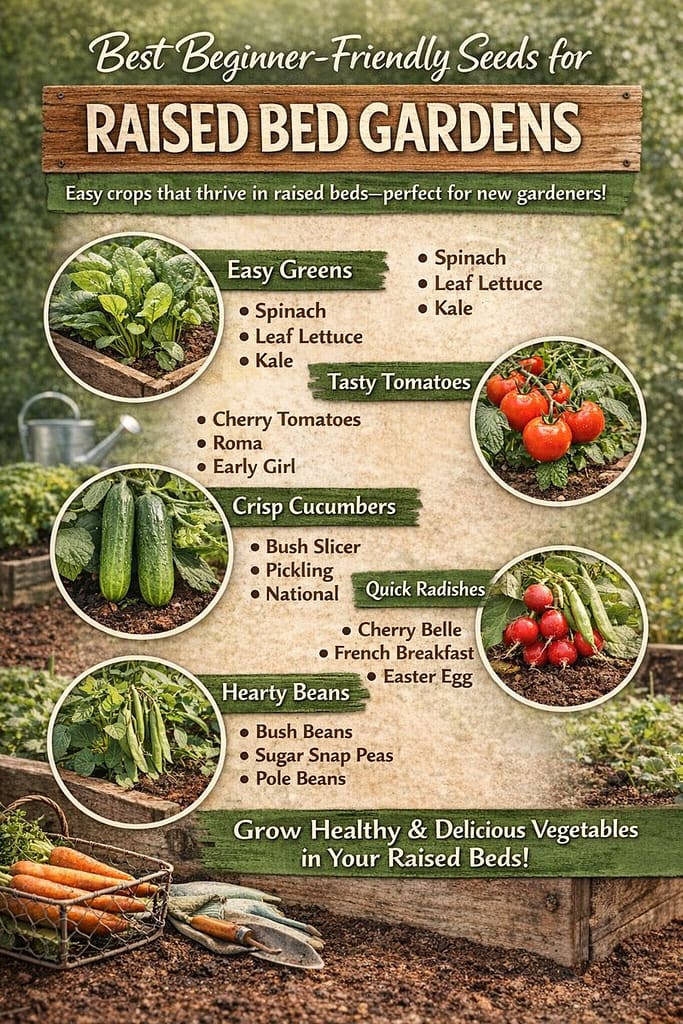
1. Lettuce & Leafy Greens (Perfect for Beginners)
Lettuce, spinach, arugula, and kale are some of the easiest seeds you can grow in raised beds.
Why they work well:
- Shallow roots
- Quick harvest (often 30–45 days)
- Can be grown close together
- Ideal for cut-and-come-again harvesting
Loose-leaf varieties are especially beginner-friendly because they don’t require perfect spacing.
👉 You’ll find a wide variety of leafy green seeds ideal for raised beds in trusted seed collections like those offered by SeedsNow.
2. Radishes (Fast Results, Big Confidence Boost)
If you want quick wins, radishes are hard to beat.
Why radishes are great for raised beds:
- Mature in as little as 25–30 days
- Thrive in loose, well-draining soil
- Help loosen soil for nearby plants
- Great for succession planting
They’re perfect for filling small gaps between slower-growing crops.
3. Bush Beans (High Yield in Small Spaces)
Bush beans are an excellent protein-rich crop that doesn’t require trellising like pole beans.
Why they shine in raised beds:
- Compact growth habit
- High yield per square foot
- Improve soil by fixing nitrogen
- Easy to grow from seed
Plant them after frost, and you’ll be harvesting before you know it.
Look for bush or dwarf bean varieties rather than climbing types.
4. Herbs (Big Flavor, Minimal Space)
Herbs are some of the most rewarding plants you can grow in raised beds.
Top beginner choices:
- Basil
- Cilantro
- Parsley
- Dill
- Chives
Why herbs are ideal:
- Thrive in well-drained soil
- Compact growth
- Perfect for small raised beds or corners
- Continuous harvest
Many gardeners dedicate an entire raised bed just to herbs — and it’s always worth it.
5. Cherry Tomatoes (Choose the Right Variety)
Tomatoes can grow beautifully in raised beds — as long as you choose wisely.
Best options:
- Cherry or grape tomatoes
- Determinate (bush) varieties
- Compact or patio types
Why they work:
- Better airflow
- Manageable size
- Excellent yields with proper support
Avoid large indeterminate varieties unless you have deep beds and sturdy trellises.
6. Carrots & Beets (Root Crops That Love Loose Soil)
Raised beds are perfect for root vegetables — especially when soil is stone-free.
Best choices:
- Short or stump-root carrots
- Baby carrot varieties
- Beets (great dual-purpose crop)
Why they succeed:
- Loose soil allows straight root growth
- Better drainage prevents rot
- Easier harvesting
Where to Find Reliable Raised Bed Seeds
Not all seeds are created equal. High-quality seeds with good germination rates make gardening far more enjoyable — especially for beginners.
👉 Seed collections like those from SeedsNow offer non-GMO, fresh, and beginner-friendly options that work especially well in raised beds.
When choosing a supplier, look for:
- Clear variety descriptions
- Growing instructions
- Good customer reviews
Tips for Getting the Most from Your Seeds
- Don’t overcrowd — spacing matters
- Label everything
- Water gently during germination
- Start small and expand gradually
- Take notes each season
Gardening improves every year when you learn what works in your space.
Final Thoughts
Raised bed gardening doesn’t have to be complicated. Starting with the right seeds puts you ahead before you even plant.
By choosing compact, reliable varieties and focusing on quality seeds, you’ll enjoy:
- Healthier plants
- Better harvests
- Less frustration
If you’re just getting started or refreshing your garden for a new season, these seed choices are a great foundation.
If you enjoyed this guide, feel free to share it with a fellow gardener and leave a comment below — I’d love to hear what you’re growing this season!