
Melon farming can be highly rewarding, but many farmers struggle with problems such as yellowing leaves, pest infestations, poor fruit development, and low yields. These issues often occur because of common growing mistakes that can easily be avoided with the right knowledge.
Whether you’re a small farmer or a home gardener, understanding these common mistakes can help you grow healthier plants and produce better-quality melons.
Here are ten common mistakes farmers make when growing melons and how you can fix them.
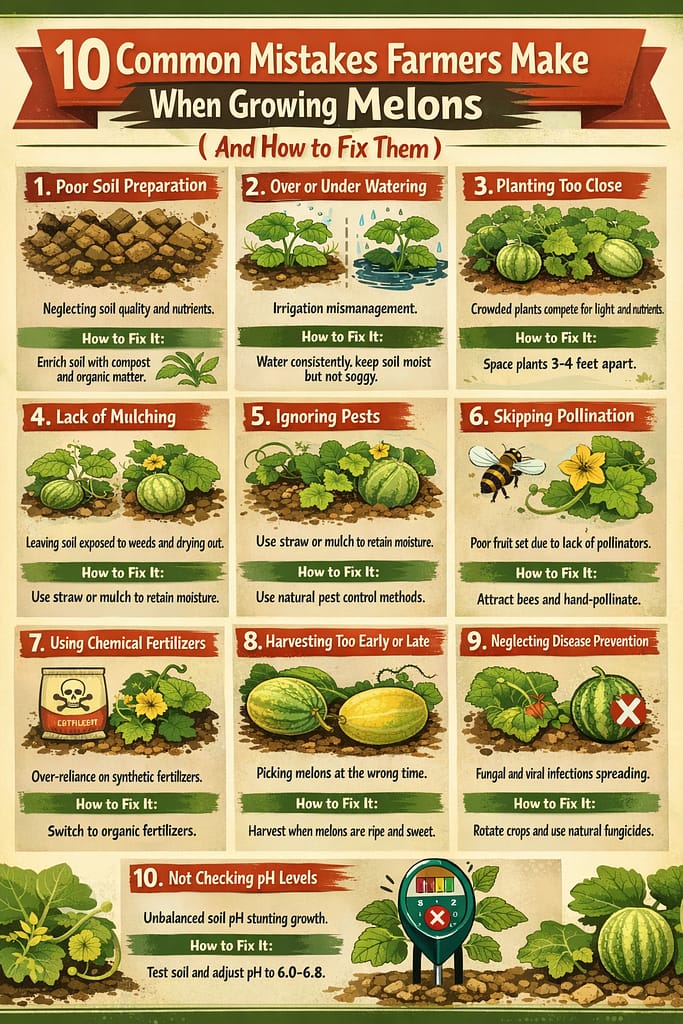
1️⃣ Planting in Poor Soil
Many farmers plant melons in soil that lacks nutrients or organic matter.
Poor soil leads to weak plants, slow growth, and low yields.
How to Fix It
Before planting, improve the soil by adding:
- Compost
- Well-rotted manure
- Organic matter
Healthy soil helps melon plants develop strong roots and greener leaves.
2️⃣ Planting Too Close Together
Melon vines spread widely, and overcrowding reduces airflow.
This can lead to disease and weak plant growth.
How to Fix It
Allow enough spacing between plants:
- 3–4 feet between plants
- 5–6 feet between rows
Proper spacing improves sunlight exposure and airflow.
3️⃣ Overusing Chemical Fertilizers
Many farmers rely heavily on synthetic fertilizers to grow large fruits. However, excessive chemical use can damage soil health and cause leaf burn.
How to Fix It
Use balanced nutrition:
- Compost
- Organic fertilizers
- Slow-release nutrients
Healthy soil naturally supports plant growth.
4️⃣ Watering Incorrectly
Too much water can cause root rot, while too little water stresses the plant.
Both situations reduce fruit quality.
How to Fix It
- Water deeply but not too often
- Water early in the morning
- Avoid watering leaves excessively
Mulching helps retain soil moisture.
5️⃣ Ignoring Pest Problems
Pests can destroy melon plants if they are not controlled early.
Common pests include:
- Aphids
- Beetles
- Caterpillars
How to Fix It
Inspect plants regularly and use natural pest control methods such as:
- Neem-based sprays
- Removing infected leaves
- Encouraging beneficial insects
6️⃣ Poor Weed Control
Weeds compete with melon plants for nutrients, water, and sunlight.
If weeds are not controlled, crop growth can suffer.
How to Fix It
- Weed regularly
- Apply organic mulch
- Keep rows clean
Mulching also improves soil health.
7️⃣ Not Supporting Pollinators
Melon plants depend on bees and pollinators to produce fruit.
Without pollination, flowers may drop without forming melons.
How to Fix It
Encourage pollinators by planting:
- Basil
- Marigolds
- Sunflowers
Avoid spraying chemicals during flowering.
8️⃣ Harvesting Too Early
Harvesting melons before they fully ripen results in poor flavor and low sugar content.
How to Fix It
Look for these signs:
- Sweet aroma
- Slight color change
- Fruit easily separates from the vine
9️⃣ Planting at the Wrong Time
Melons require warm temperatures to grow properly.
Planting too early can slow growth and damage seedlings.
How to Fix It
Plant melons when:
- Soil is warm
- Frost risk has passed
- Weather conditions are stable
🔟 Ignoring Soil Health After Harvest
Some farmers harvest melons but do not restore soil nutrients afterward.
This weakens future crops.
How to Fix It
After harvest:
- Add compost
- Rotate crops
- Plant cover crops if possible
Healthy soil ensures better yields in the next growing season.
Final Thoughts
Melon farming success often depends on avoiding simple but costly mistakes. By improving soil health, spacing plants properly, managing pests naturally, and harvesting at the right time, farmers can grow stronger plants and produce better-quality melons.
With the right growing practices, melon farming can become both productive and sustainable.
Thanks once again for checking out my article, if you enjoy reading article like these please to share, like, and leave your comments in the box below thank you.